Liquid Room V (Subtilior)
Liquid Room V (Subtilior)

GUESTS
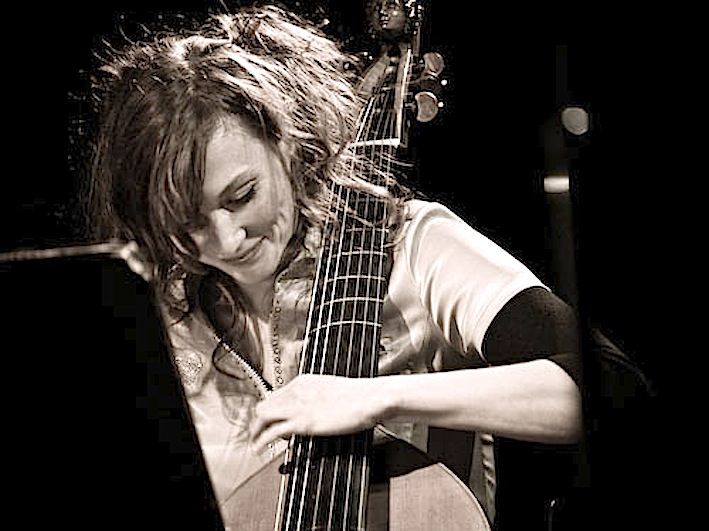
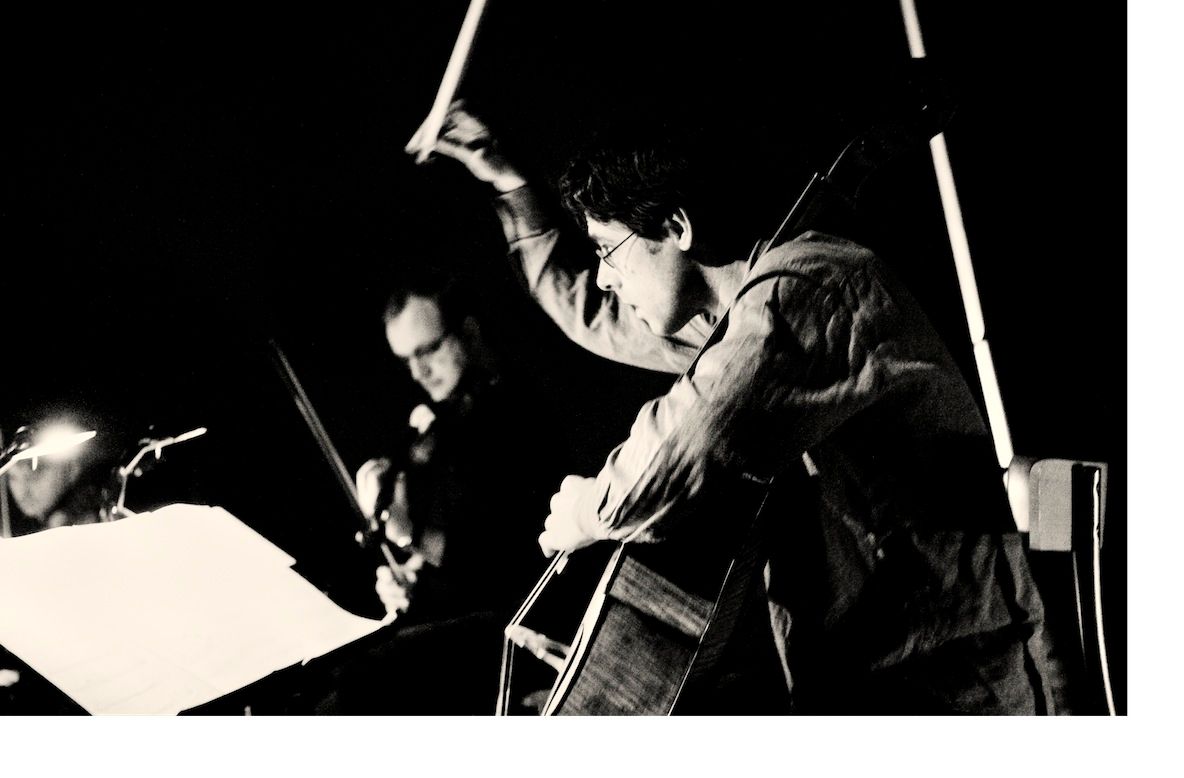
For this fifth LIQUID ROOM instalment, we are inviting three members of the outstanding Viennese ensemble MIKADO, specialising in medieval and Renaissance music: Thomas List playing the recorder, Theresa Dlouhy singing, Eva Reiter playing the hurdy-gurdy. Reiter, it should be stressed, is also a first-rate gamba player and flautist (specialising in the contrabass recorder or Paetzold recorder), and this is not the first time Ictus has collaborated with this artist.
SUBTILIOR
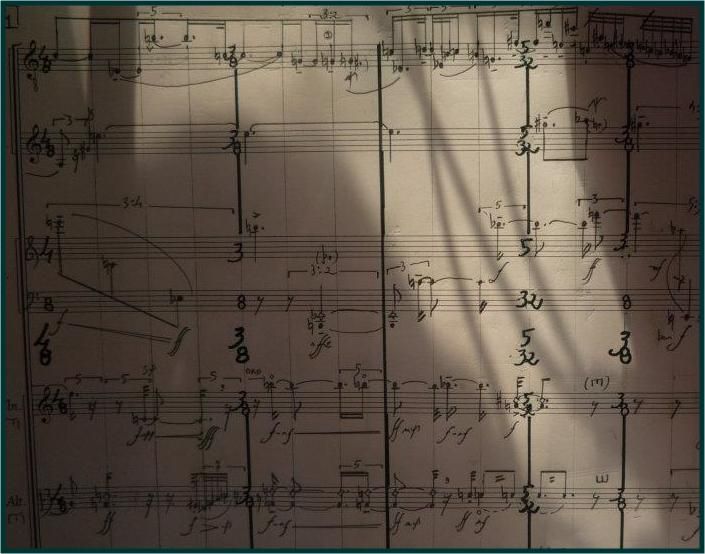
The term Ars Subtilior was first suggested in 1960 by the musicologist Ursula Günther, as an affirmative alternative for referring to the latest development of Ars Nova music in the late 14th century, which up until then was saddled with the somewhat sceptical label of "Mannerist style". Subtilis, Subtilior, Subtilitas: these terms are peppered throughout the writings of Philippus de Caserta and Egidius de Murino. These two composers are fairly representative of this refined movement that came into being against the background of the seigniorial courts in the South of France. The "Subtlety" obviously conjures up a whole world of subtle melodic and rhythmic distinctions, delicacy of phrasing, the refinement of longing typical of courtly love. While also being evocative of skills, science, writing for pleasure, formal accomplishment, everything now referred to as the "art of constraint": polytextual counterpoints blending various lyrical effusions expressing different viewpoints, calligrams, quotations, self-quotations, irony; overlapping metres (9/8 over 5/2 over 7/3, for example, in the case of Cordier) and various modes; rhythmic instability by intensive use of syncopation “which fails to resolve”; high velocity of the upper voice; numerous alterations creating a chromatic atmosphere and, above all, creating the impression of a high level of vocal autonomy that is embodied in the polyphonic texture only with a cavalier attitude. (1)
The extent to which medieval and Renaissance music infused contemporary post-war music is well-known. A memorable example is the lovely story by Luigi Nono, referring to the impassioned evenings spent with Bruno Maderna, trying to decrypt the enigmatic canons written according to the magic quadrant rules. The formal investigations of pre-tonal music inspired the post-tonal ones, as a guarantee that the strictest sets of constraints were completely consistent with the delicate passion of an aristocratic expression. For them the Subtle acted as a talisman, a spiritual shield as protection against the romantic sentimentality they were both drawn to and repulsed by and from which they sought an escape route. Being reconciled with the 19th century, we still continue to be charmed by the strange affinities of the 14th and 20th centuries. It is a bit like a guild, a Subtle Alliance
____________
(1) N.B.: our friends, partners and fellow occupants of the Rosas dance company's premises, headed by Anne Teresa De Keersmaeker, have devoted two splendid performances to Ars Subtilior music: En Atendant (2010) and Cesena (2011).
NIGHT
Our Viennese friends are offering us Landini, Caserta, Ciconia: the expression and the sound of a period that are so near and yet so far away. In exchange for which we propose contemporary music – from Klaus Huber to Bernhard Gander, via Conlon Nancarrow – as well as two pieces especially written to mark the occasion (Franck Yeznikian and Christophe Guiraud), where we blend modern and old instruments in unusual combinations: clavichord and electronic sounds, for example – and lashings of flute, all kinds of wooden and metal flutes.
We are not trying to compete with Ars Subtilior, to outdo it in terms of ostentatious intricacy and manic polyphony. We delved into the "nocturnal" repertoire to choose (and commission) contemporary work. In order to be Subtilior, a formal unleashed attitude has to be delicately combined with a restrained form of expression. Experimental music and modest singing are not strange bedfellows: quite the contrary, they make a smooth blend to be filed under Enigmatic. Associating with medieval enchantments, contemporary music will reveal its least well-known side, even though this is perfectly consistent with its history: when the gentle expression, refined tones, intertwining polyphonic lines and varied ornamentation are combined to form a kind of “peaceful evening”, where the shadows are our friends and fragility a badge of honour. The listener stands on guard, forgetting the diurnal disturbances, rediscovers music as the art of the half-said and a discipline of Secrecy.
PROGRAMME
This lengthy programme will unfold in a single curve on four sets, according to the rules of echo. cross-fading or contrast... As is the wont in the Liquid Room, the programme provided to the audience features the works and their commentaries in disorder or alphabetic order. The titles of the pieces performed will then be projected in real time onto a giant screen (with the texts of the sung works, where appropriate).
The medieval works and the two new pieces will form the nucleus. The combination of accompanying works might be subject to minor changes. Date: March 2014, Kaaitheater, festival Ars Musica / Klara Festival (co-produced with Bozar and Kaaitheater), Brussels.
THE LIQUID ROOM FORMAT
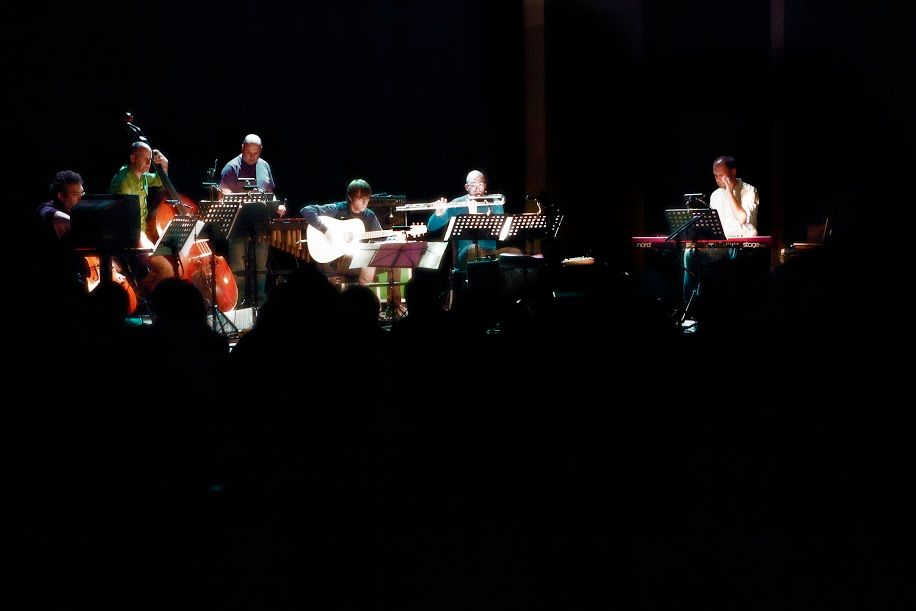
Ictus' "Liquid Rooms" represent a format of presentation over and above their role as a repertoire reservoir. The tiers of seats are removed from the concert hall, while four stages are arranged along the walls. The audience members are free to adopt whichever position they like. They can stroll around, remain standing, loll about on the floor or make use of one of the 100 small mobile cardboard stools we provide... They are also at liberty to take advantage of our "open door" policy by circulating between the bar and the hall. Everything is smoothly linked together, such that the musicians can be seen limbering up for their turn on one stage while their colleagues are busy performing on another one. The stage management ticks over perfectly, just like a theatre play: the amplification and lighting create a moon-like atmosphere. As a result of all these careful preparations, the members of the audience are regaled with an uninterrupted flow of music lasting at least two hours. Set changes are banished from the Liquid Room, where the fine-tuned linkages are achieved as a result of changing over from one set to another. Each performance is an extension of its predecessor, either commenting on the earlier one or contradicting it via a contrast-enhancing effect.
The repertoire unveiled to the public is generally of the chamber music ilk, ranging from a soloist to a sextet, with the focus being on the individual performance, physical dexterity, concentration and the privileged instance. Developing their shapes and shaping their tempos, the "works" in the true sense of the term alternate with Cagian-style "performances", where the emphasis is generally on the zero time prized by Christian Wolff, circular time as sheer contemplation on sound. Serving to highlight the relationship to the instrument and the ability to master an idiom, the acoustic performances also alternate with interdisciplinary music for instruments and electronic sounds. The latest generation of composers have taken this style to such an extreme that "rock" and "academic" music have become indistinguishable. The audience is encouraged to switch its auditory attention in line with the way the repertoire switches from one stage to another: the casual listening of the festival-goer, the meditative listening of the soundscape enthusiast, the attentive listening of the music lover, the critical listening of the musicologist...
The Liquid Room experience has led us to this unexpected finding: the scope for pacing up and down in a large hall so as to switch from one stage to another – to listen very close-up or further away, to choose when and how to listen, to head to the bar and head back – in a nutshell, the kind of freedom you do not expect to find during a classical concert actually enhances the audience's attention, makes them more alert, strangely enough. They are allowed to observe and discover. Some younger audience members, for example, were seen with their noses almost pressed against the instrument of our cellist playing Helmut Lachenmann's Pression – while we personally had the opportunity to rediscover this work, its choreographic and acoustic impact, as if it had actually been designed for this kind of forum.
Liquid Room V: Subtilior, in March 2014 at the Kaaitheater in Brussels, is set to be the 10th instalment, in the wake of three other Brussels outings (Kaaitheater, 2009, 2011, 2013), and six others at the following venues or festivals: Bruges (Concertgebouw, 2009), Vienna (Wien Modern, 2009), Hamburg (Kampnagel, 2012), Darmstadt (final concert Internationale Ferienkurse, 2012), Luxembourg (Grand Théâtre, 2012), Ghent (Handelsbeurs, 2012).
+*Darmstadter Echo, 30.Juli 2012, von Thomas Wolff
(...) It rolled, it foamed and boiled in the Darmstadium: With the three hours lasting event "Liquid Room" the '46th International Summer Courses for New Music' celebrated furiously their closing night, sailing public of around 900 over a lake of experimental sounds.*
GALLERY
CAST & CREDITS
- Eva Reiter, viola da gamba, Paetzold flute
- Thomas List, flauto dolce
- Theresa Dlouhy, voice
- Geert De Bièvre, Ictus
- George van Dam, Ictus
- Jean-Luc Plouvier, Ictus
- Jeroen Robbrecht, Ictus
- Michael Schmid, Ictus
- Chryssi Dimitriou, Ictus
- Tom Pauwels, Ictus
- Alexandre Fostier, Sound