Le Noir de l'Étoile (Gérard Grisey)
✕Le Noir de l'Étoile (Gérard Grisey)
✕
corridor of transparency
When music manages to conjure up time, it is imbued with a truly shamanic power, that of connecting us to the forces that surround us. In past civilizations, lunar and solar rituals served as a form of conjuration. Thanks to them, the seasons could return and the sun could rise each day. What about our pulsars? Why bring them here today, at a time when their passage across the northern sky makes them accessible?
Gérard Grisey
On Friday, January 16, we will inaugurate the Atelier BNO at Bozar as a concert hall, a magnificent pyriform room (pear-shaped, like certain well-known piano pieces).
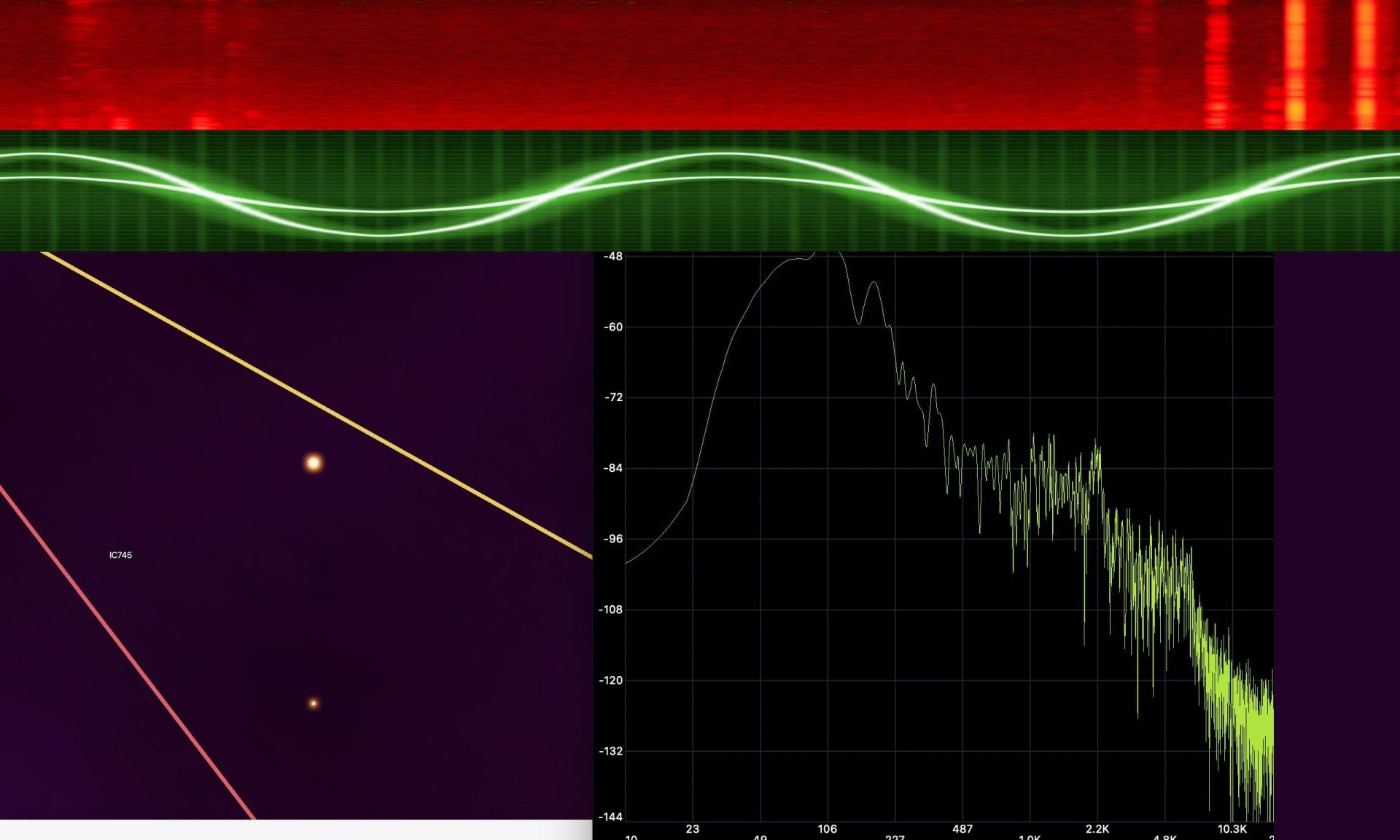
LE NOIR DE L'ÉTOILE, composed in 1990 by Gérard Grisey, reflects the three major concerns of the end of his life:
- The occupation of space (six percussionists spinning rhythmic sequences at full speed around the audience);
- A polyphony of tempos (quote: “The composer's art resides in bringing these different times into phase with each other [...] This produces a flash of musical ecstasy, a veritable corridor of transparency where, for a few seconds or even a few minutes, these irretrievably separate times communicate and sometimes merge”);
- A negotiation with an extra-human element, which debunks the myth of the composer-demiurge (here, the impulses of astronomical signals from pulsars, which set the tempo for the percussionists). (1)
Our musical director Tom De Cock sent unusual instructions to his fellow percussionists: "We will play a version that is non-macho and horizontal. The key-word for this production is sensuality. No over-playing. Like liquid metal. Always beautiful and non-aggressive.“ (!).
Pawel Krynski, a young astrophysics researcher, will give us a brief prelude lesson on pulsars, the ”cosmic metronomes."
_______
(1) The quote from Grisey, and all of the ideas outlined here, come from Nicolas Donin, “Composer le temps” (Composing Time), a chapter in the collective work "Où est passé le temps ? (Where Has Time Gone?)", Paris, Gallimard, 2012—a must-read. The question of sound ecology has become Donin's main field of research. "Le Noir" is certainly not an “ecological” work, and resembles more a strange mix of science fiction, percussion concert, and pagan ritual, but it nonetheless remains a kind of milestone in the musical field. It reveals new concerns and new positions. “Producing an original musical time, [as Grisey suggests], is no longer really enough if it is not related to sound ecology—a science and politics of the physical, social, and cultural environment in which new music is destined to appear,” writes Nicolas Donin.
______
FURTHER READING
Bozar commissioned a short but comprehensive text on “Le Noir" to our dear Klaas Coulembier, published in three languages on the Bozar website, >LINK
And on the occasion of the work's performance by Les Percussions de Strasbourg in 2025, the Musica festival in Strasbourg published a text by Lambert Dousson that considerably broadens the horizon! It discusses the invisibility of women, LSD, and Joy Division. In French only, >LINK.
GALLERY