Einstein on the beach [Tour 2026]
✕Einstein on the beach [Tour 2026]
✕![Einstein on the beach [Tour 2026]](/api/strapi/uploads/sv_c707843f49.jpg)
PRESS REVIEW
« An incalculable vertigo. » (Corriere della Serra, ROMA)
« Something magical happened in Rotterdam [...] Sublime experience »
(Theaterkrant, NETHERLANDS)
«At 8 o'clock sharp, almost unexpectedly, the numerical melopea that opens the opera began. From there everything happened as in one breath.» (El País, SPAIN )
« There is no doubt that this concert belongs to that select group of concerts chosen to be remembered and told. [...] We can say: we were there » (Ritmo.es)
« The radical and pure version of extraordinary Ictus Ensemble, Collegium Vocale Gent and Suzanne Vega led us to a deep concentration that enabled this new state of consciousness, what the Sanskrit called Dharana. » (El Punt Avui, BARCELONA)
« An exhaustion battle, an incredible tour-de-force [...] Suzanne Vega gave it a wonderful musical charge [...] Three memorable hours. » (Eindhovens Dagblad, NETHERLANDS)
« It has been so long since I left a theater with the conviction of having lived a crucial experience in my life as a music lover. » (Platea Magazine, BILBAO)
« The musicians on stage really outdid themselves, becoming Marvel or DC Comics figures emerging from the sand and revealing music as a special power. » (Internazionale, ROMA)
« Chemically pure. [...] We witness a total success in our eyes as the minimalist spirit of the work is perfectly captured, in a different way from what Wilson and Childs proposed. » (ForumOpera.com)
« An energetic black hole » (El Periodico, BARCELONA)
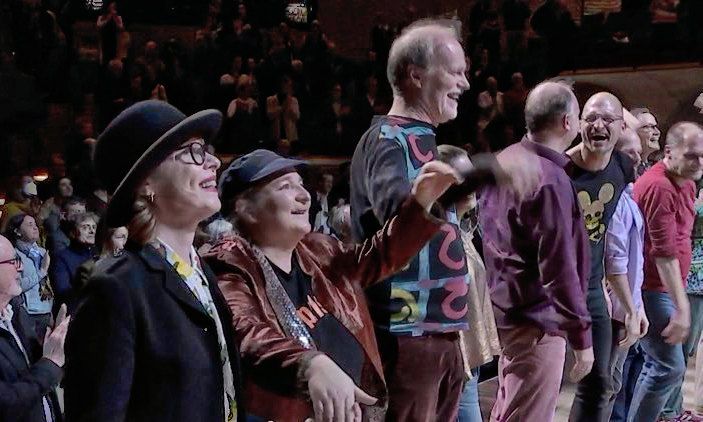
« As every time they engage with a repertoire work, Ictus Ensemble puts its special stamp on it by proposing a real new reading, rewarded by a prolonged standing ovation at the end of the performance. » (ResMusica.com)
*An open space and an Einsteinian time dilation for this very unusual concert:
200 minutes of rhythmic high-speed micro-surgery, contrasting dramatically with the text that is whispered into the mic.
We will perform this sensational score, which dates from 1976, – from Philip Glass’s vicious experimental period,
both very radical and very poppy – with Collegium Vocale Gent (choruses) and Suzanne Vega, who is even more charming thirty years after Tom’s Diner, as the narrator, and who takes on all the roles in this opera.
Belgian and European tour.*
PRESENTATION AND CONCEPT
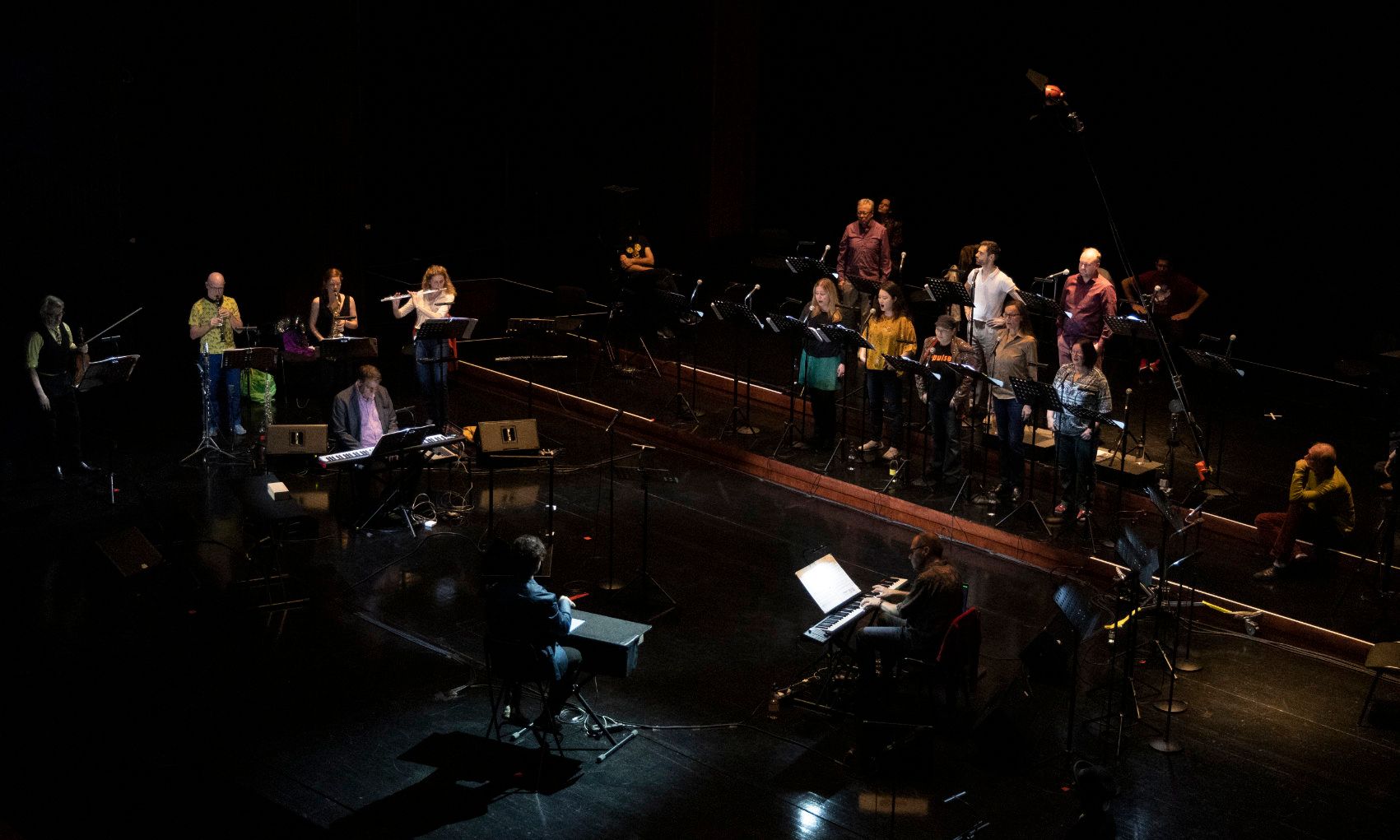
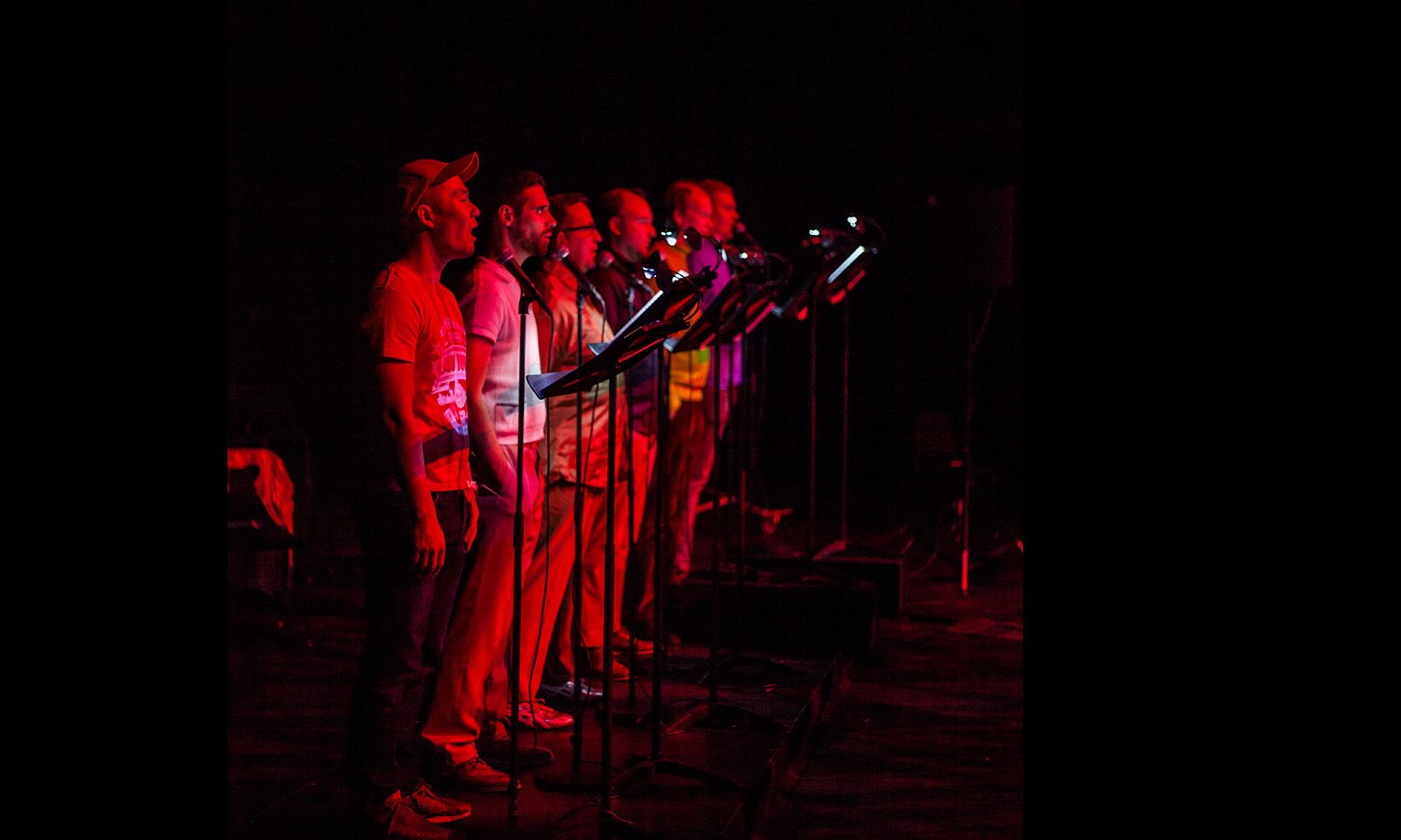
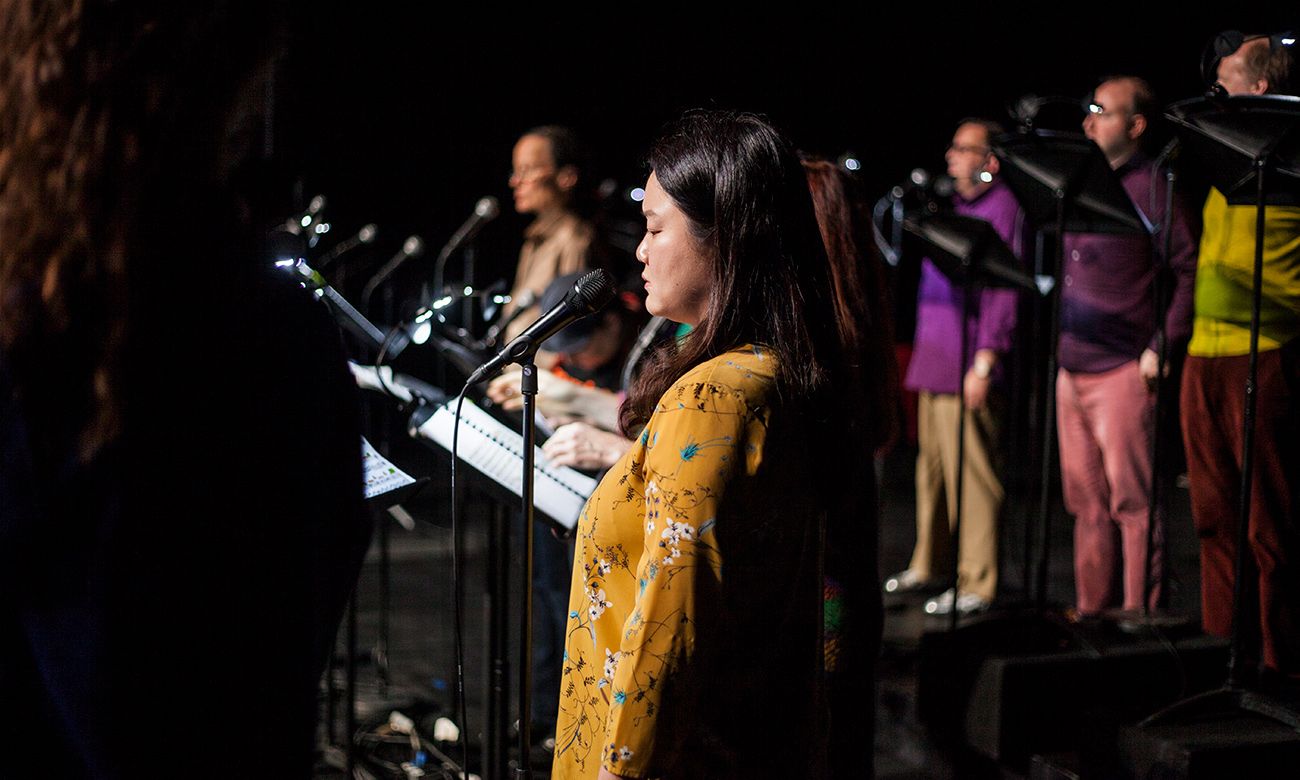
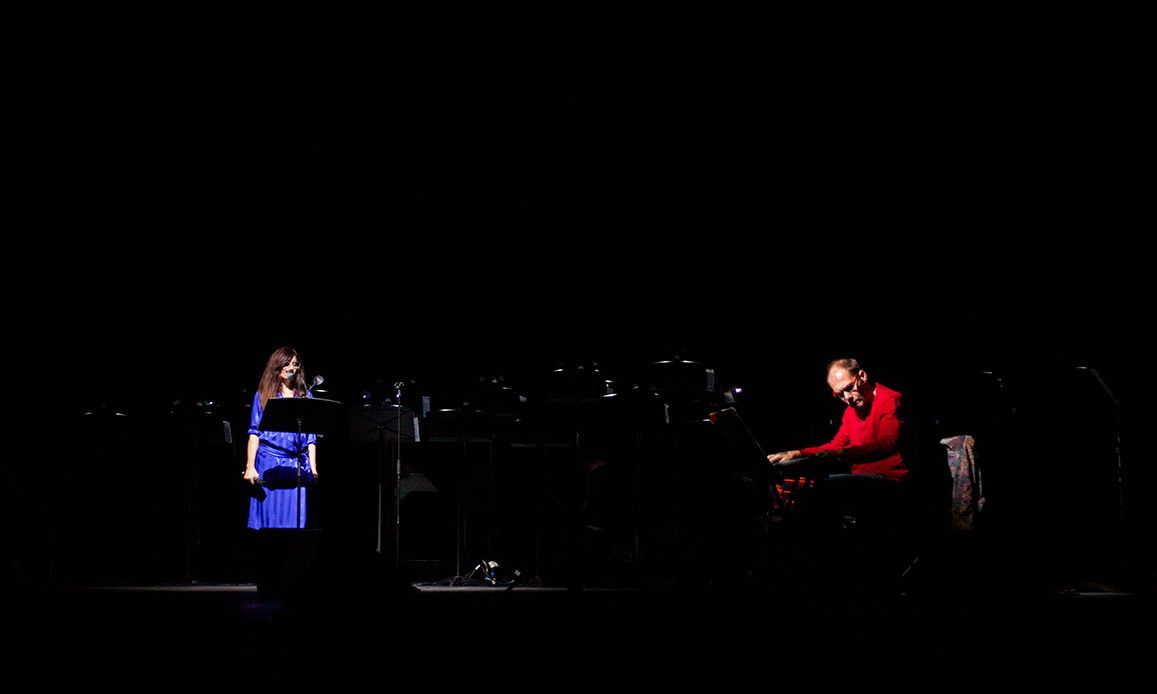
*This concert version of Einstein on the Beach*** by Philip Glass is a collaboration between Suzanne Vega, Ictus Ensemble and Collegium Vocale Gent. It presents a sheer musical approach to the full score of the legendary Glass/Wilson opera where the virtuosic instrumental, singing parts and crystalline structure of the piece are enhanced by a site-specific approach.
The focus of this production is the musical score itself and the musical sound of the libretto. We opt for a long-stretched performance (very close to the full score composed for the actual opera). In this way we want to create a minimalistic sound-bath of more than 3 hours length that reconnects to the freshness and radicality of early minimalism. The door of the concert hall will be kept open throughout the performance (the audience is free to wander in and out).
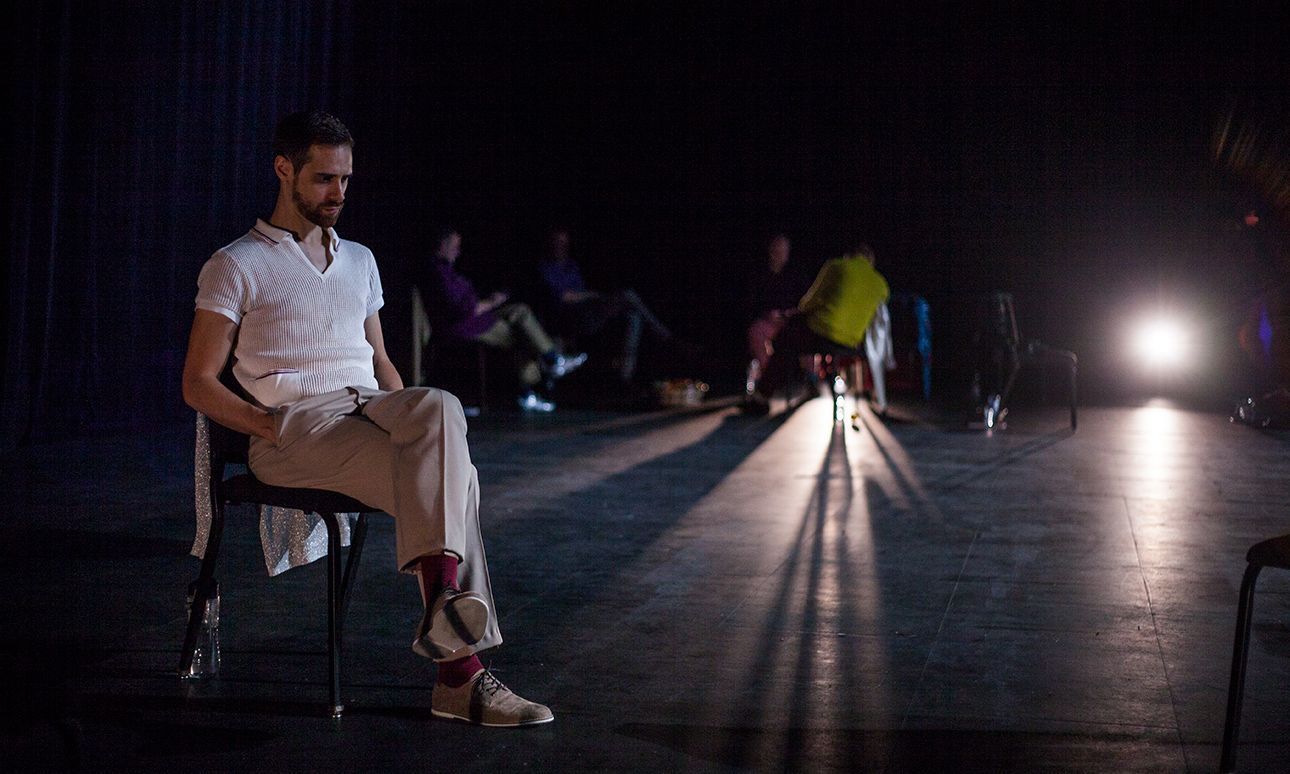
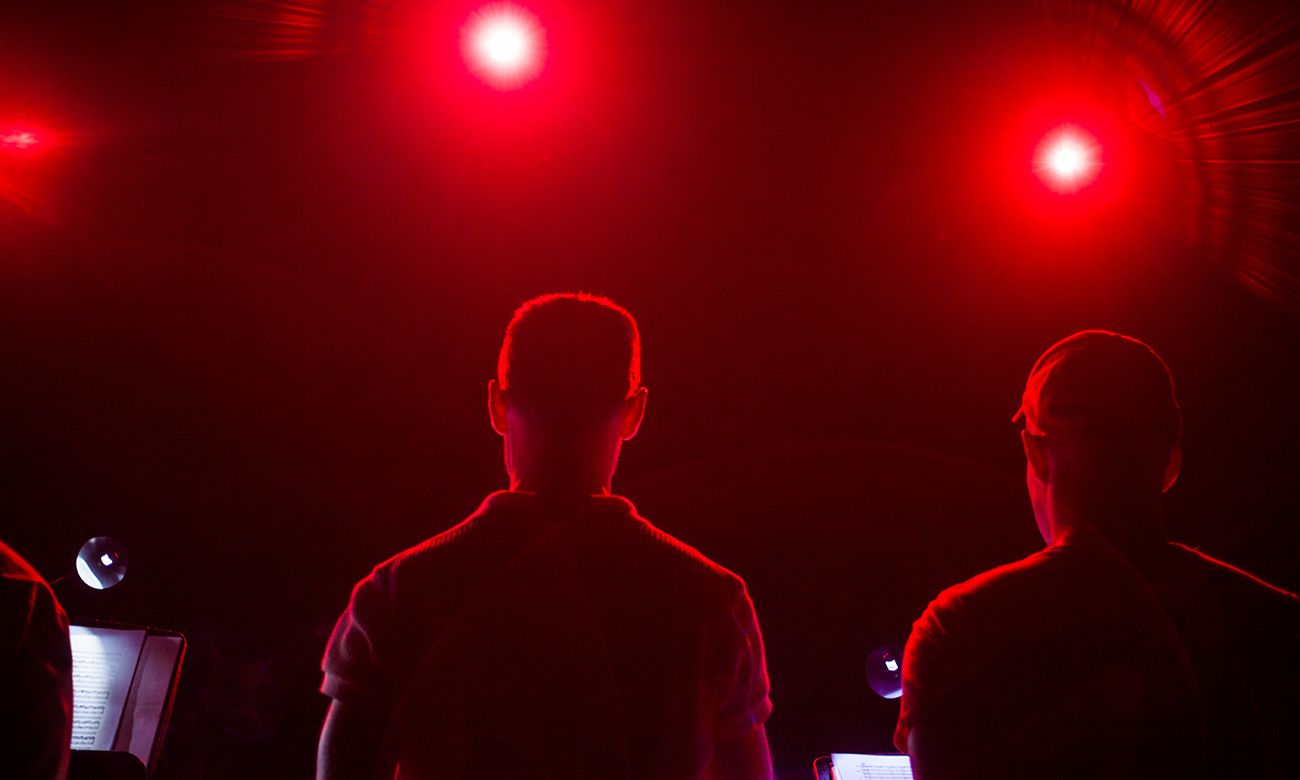
It is the music making itself that will be exposed. The physical and mental challenge of making 200 minutes of music. We will show musicians at work. In a shared time and space with the audience, structured by the music, they will perform different parts from different positions on stage, share the audience view when not playing, surround them or play frontal, thus transforming the concert hall in a visual and auditive surrounding environment.
VOICE AND TEXTS
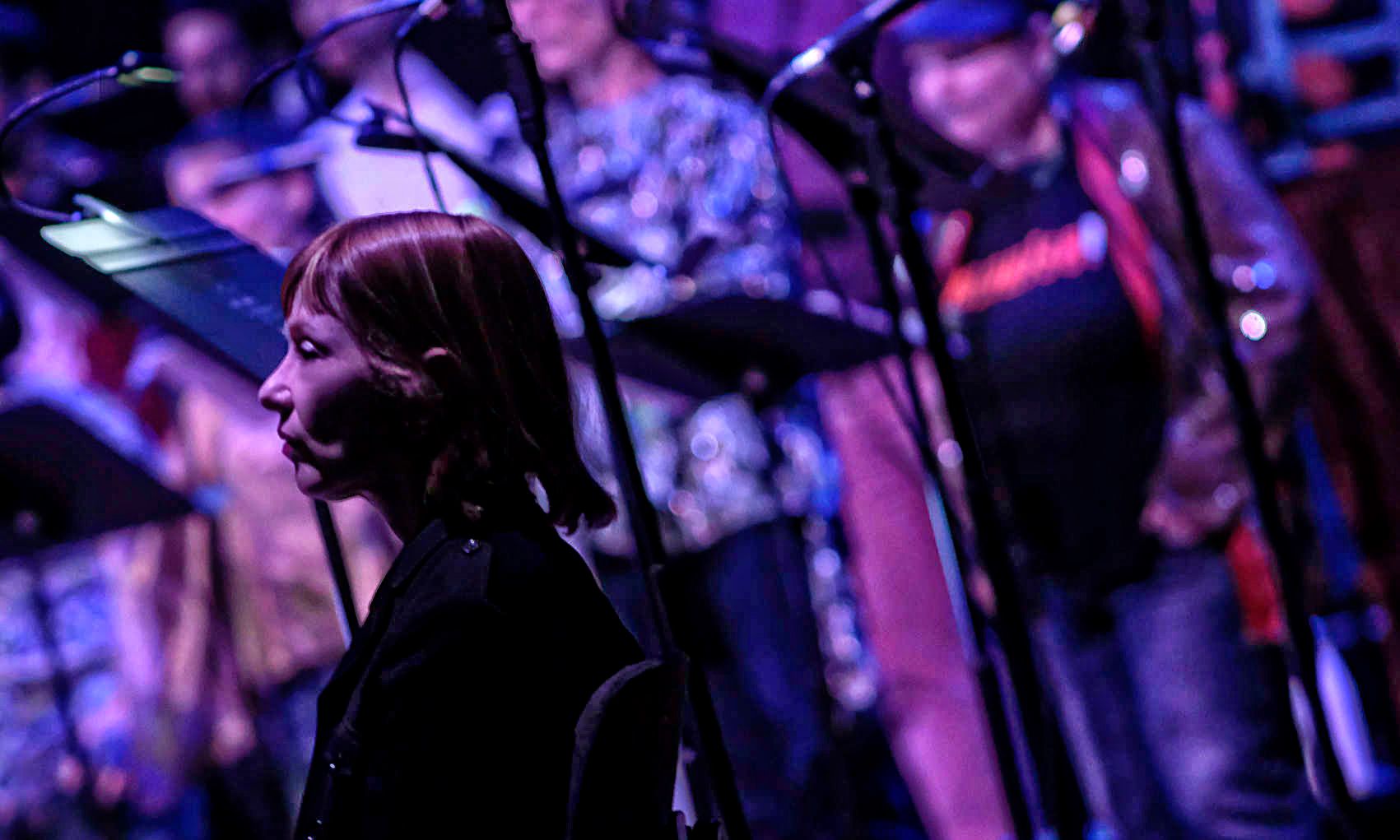
Suzanne Vega provides a personal reading of the original abstract libretto. Widely known for her chart toppings tracks from the 1980s such as Tom’s Diner and Marlene On The Wall, Vega has had a long association with the New York musical and literary (it was Glass himself who arranged Fifty-Fifty Chance on Vega's third CD).
In this version, Vega acts as a multi-character narrator, bringing out the collage of voices in the texts of Christopher Knowles, Samuel M. Johnson and Lucinda Childs to provide a dramaturgical unity between all the components. .
A TOUCH OF HISTORY
Einstein on the Beach was premiered in 1976, the same year as Music for Eighteen Musicians by Steve Reich: with these two masterpieces American minimalism finally came out of the shadows of the underground scene to suddenly encounter large audiences.
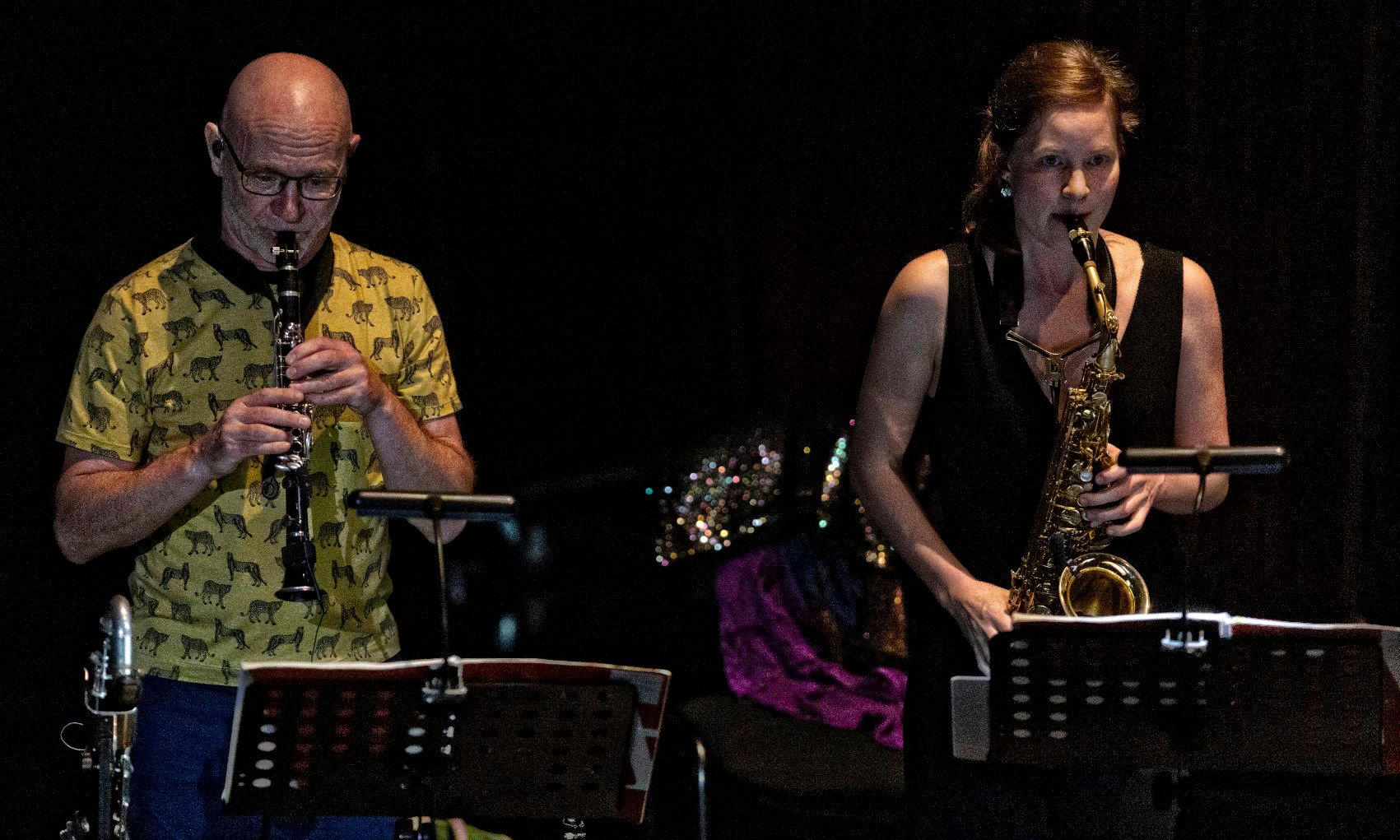
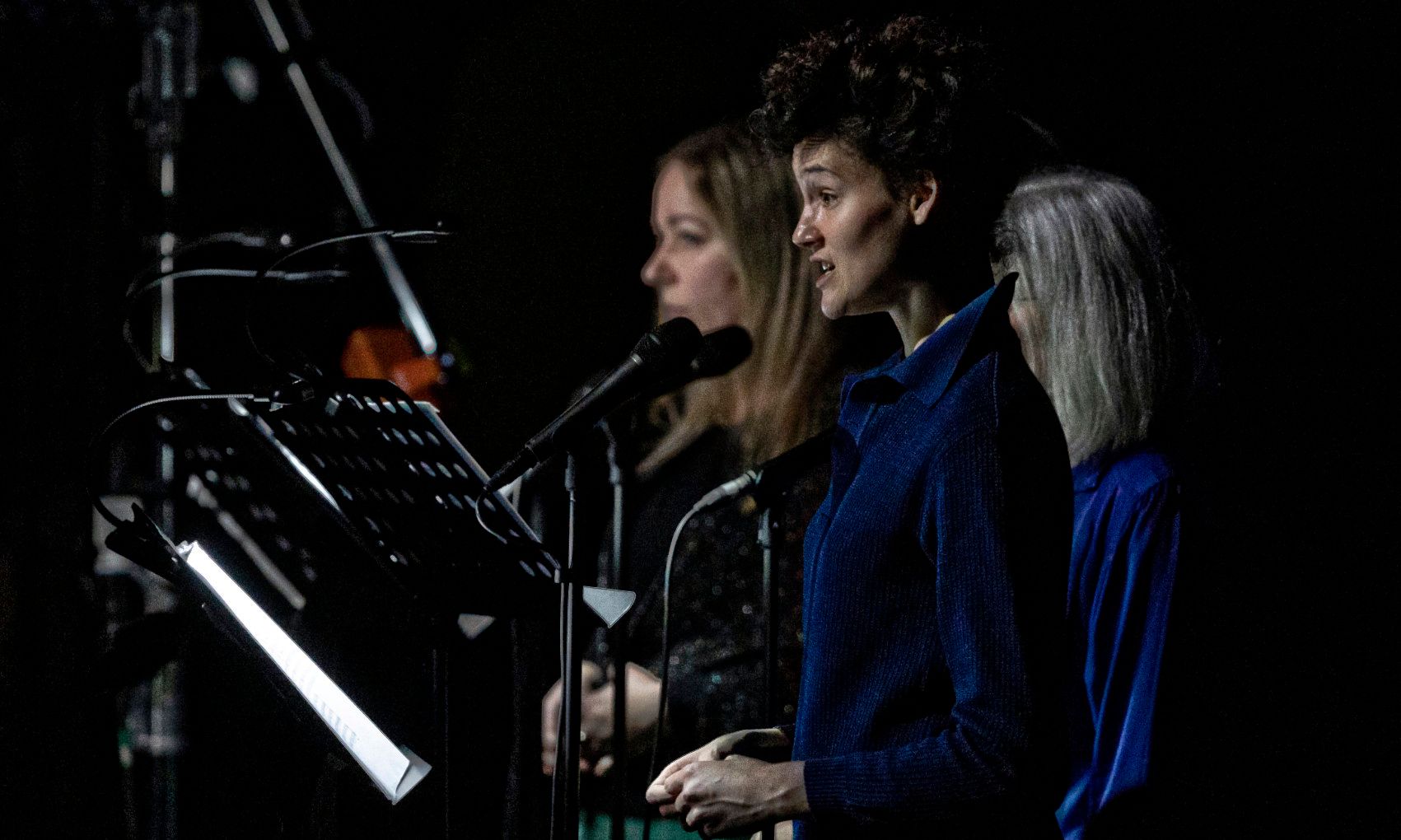
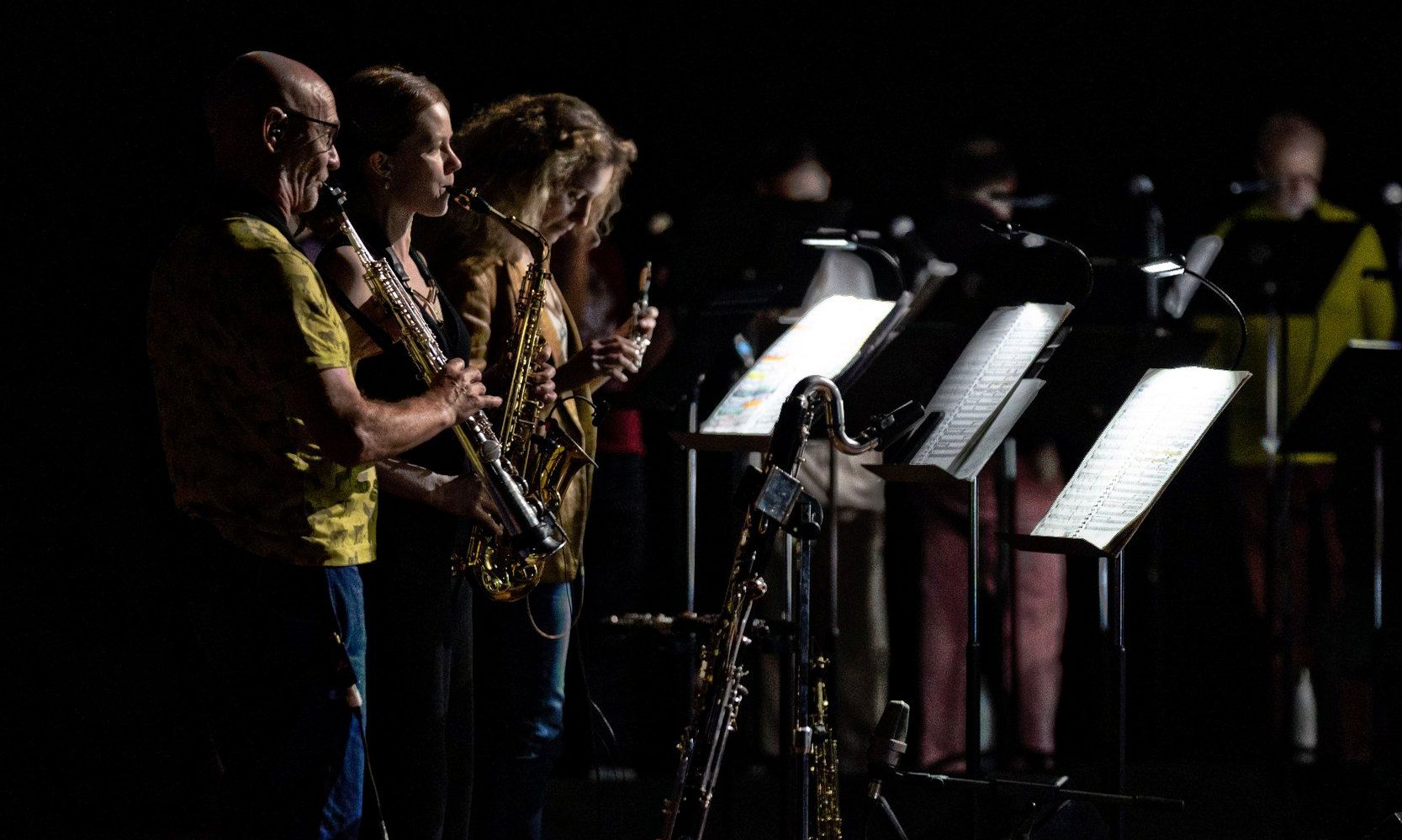
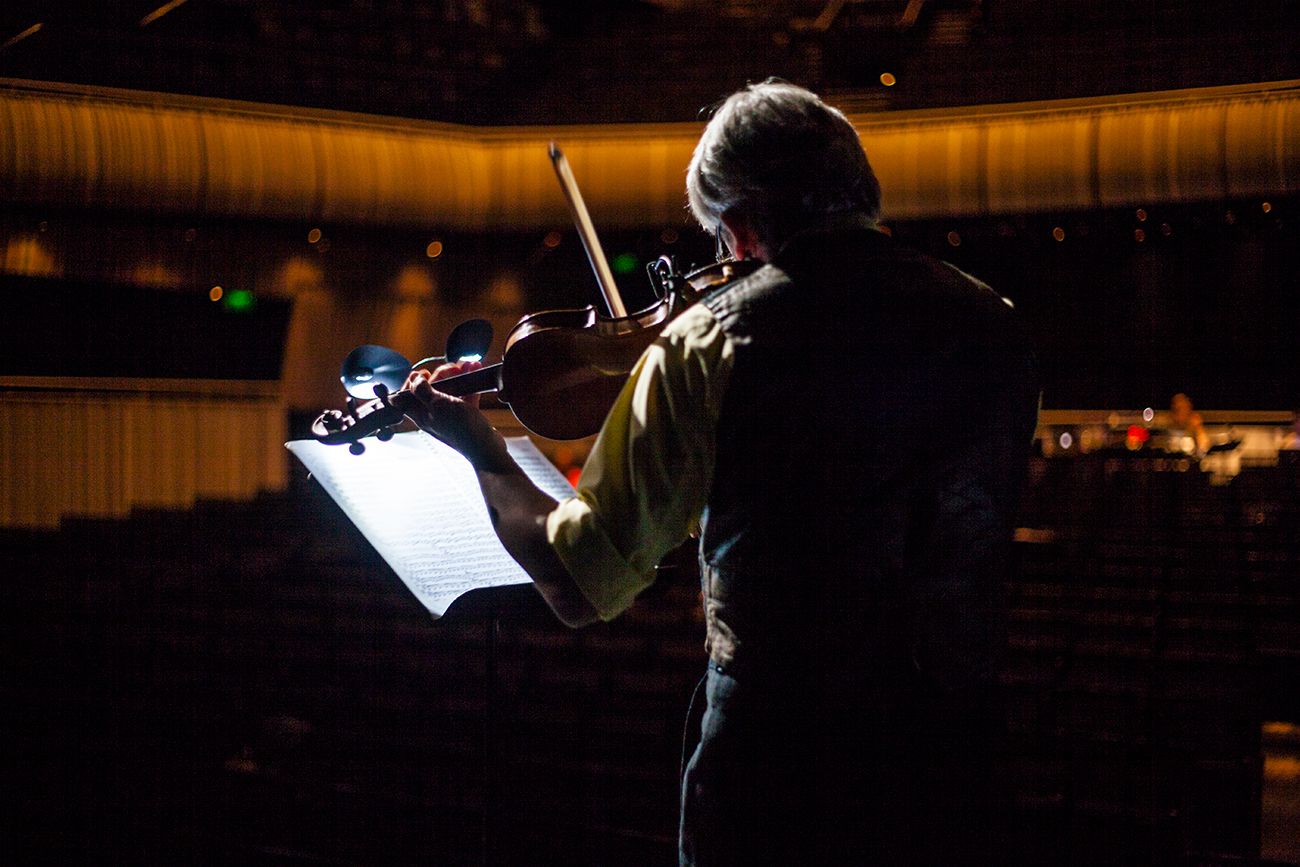
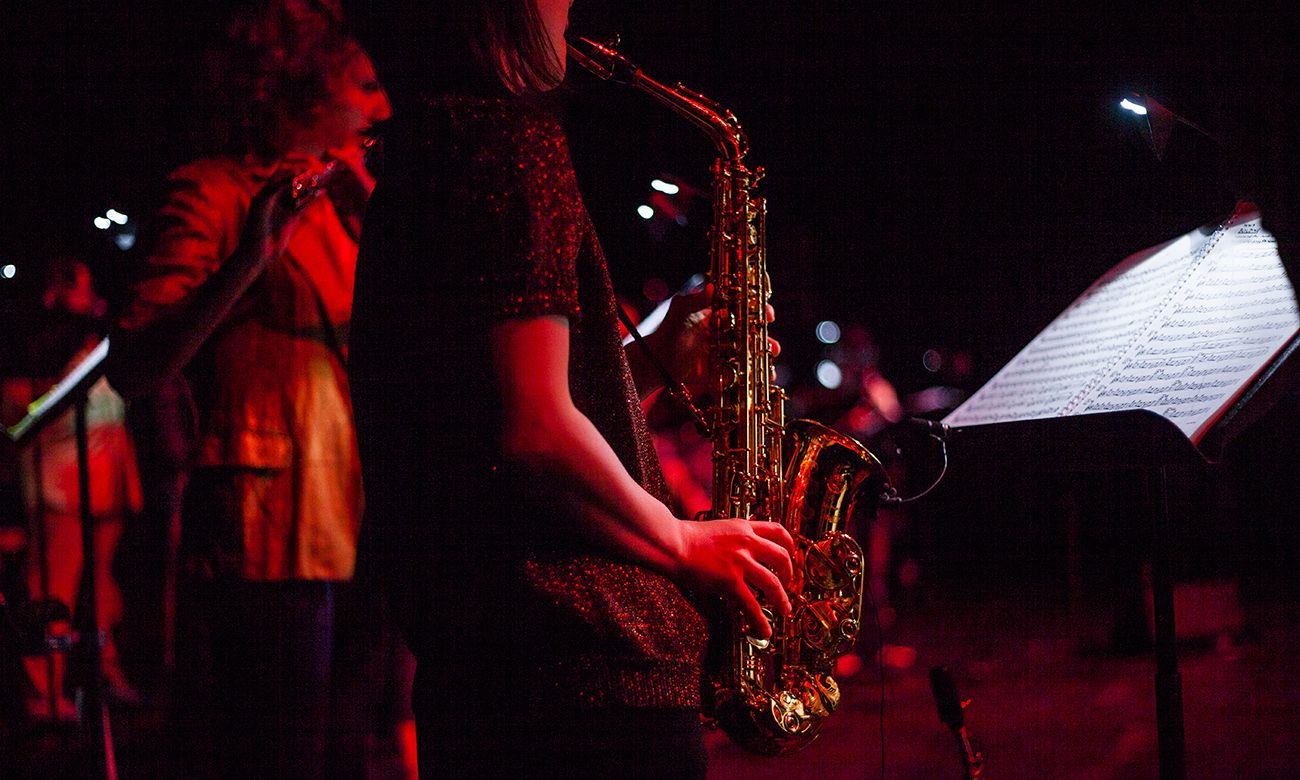
The piece is written for choir and amplified ensemble, a hybrid formula between chamber ensemble and a pop band (at the time modelled on the Philip Glass Ensemble): two keyboard players playing organs and synthesizers, saxophones, flutes and clarinet. In addition to that Glass calls for a soloistic violinist, who was supposed to be the incarnation of the character of Albert Einstein himself. ‘Einstein’ still bears the traces of the radical musical experiments the composer conducted in his youth that were thought of as formal ‘etudes’ (Music in Fifths, Music in Contrary Motion,...) and is developed by accumulation of very short musical motifs that are submitted to processes of augmentation or arithmetical subtraction that dazzle the listener…
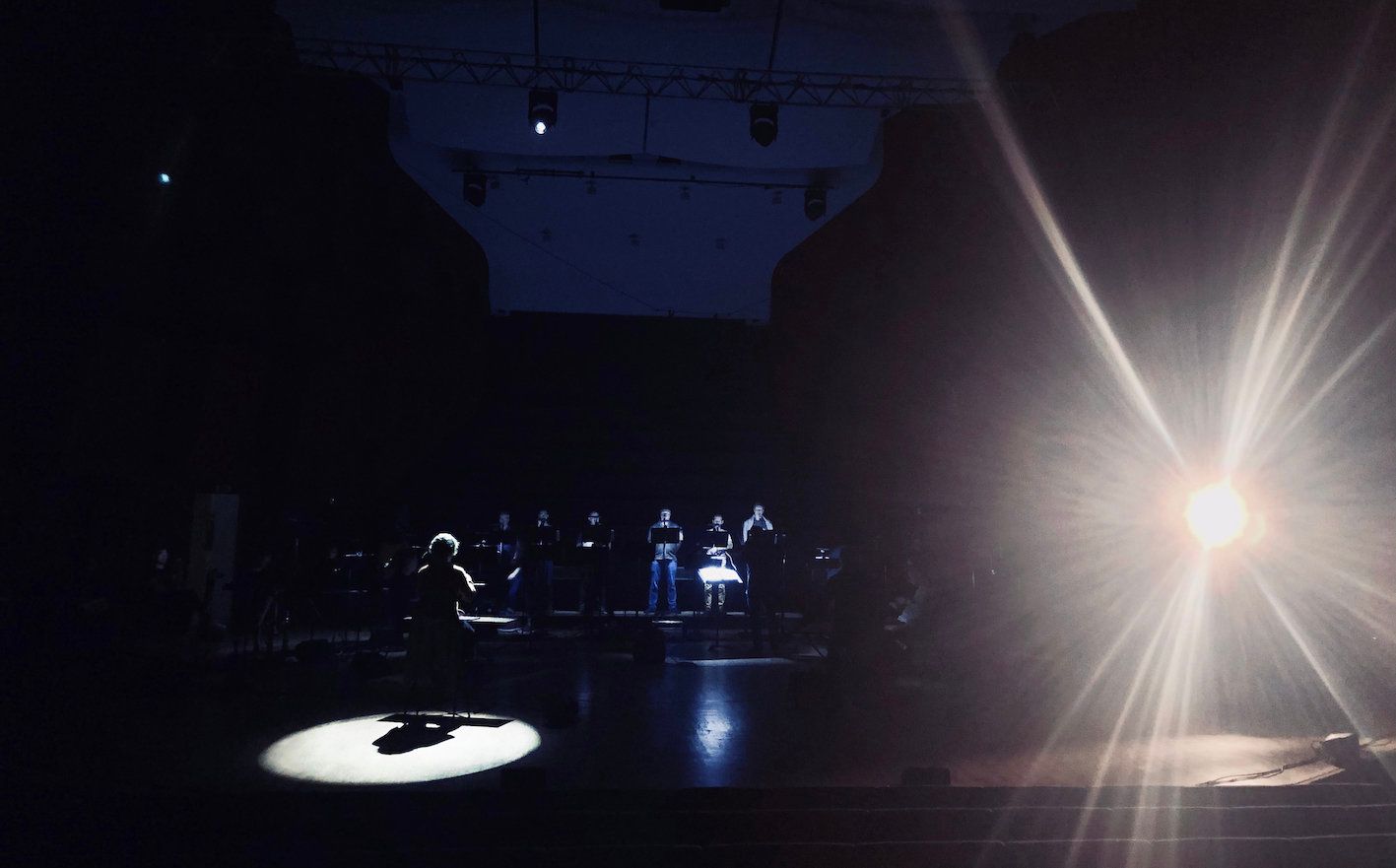
For Ictus, the whole adventure began with a decisive encounter with Germaine Kruip, an artist who studies (in her own words) “the scenography of ungraspable phenomena, such as the ever-changing daylight and the passage of time.” Our first tour was based on a light installation by Kruip, which blurred the separation between the stage and the audience, while strange and menacing black holes swirled along the walls of the venue. Our current, simplified setup retains the imprint of that experience.
BIOS
SUZANNE VEGA
Suzanne Vega emerged as a leading figure of the folk-music revival of the early 1980s when, accompanying herself on acoustic guitar, she sang what have been labelled contemporary folk or neo-folk songs of her own creation in Greenwich Village clubs. Since the release of her self-titled, critically acclaimed 1985 debut album, she has given sold-out concerts in many of the world’s best-known halls. In performances devoid of outward drama that nevertheless convey deep emotion, Vega sings in a distinctive, clear vibrato-less voice that has been described as “a cool, dry sandpaper- brushed near-whisper” and as “plaintive but disarmingly powerful.”
Bearing the stamp of a masterful storyteller who “observed the world with a clinically poetic eye,”Suzanne’s songs have always tended to focus on city life, ordinary people and real world subjects. Notably succinct and understated, often cerebral but also streetwise, her lyrics invite multiple interpretations. In short, Suzanne Vega’s work is immediately recognizable, as utterly distinct and thoughtful, and as creative and musical now as it was when her voice was first heard on the radio over 20 years ago.
ICTUS ENSEMBLE
COLLEGIUM VOCALE GENT
was founded in 1970 on Philippe Herreweghe’s initiative by a group of friends studying at the University of Ghent,. They were one of the first ensembles to use new ideas about baroque performance practice in vocal music. Their authentic, text-oriented and rhetorical approach gave the ensemble the transparent sound with which it would acquire world fame and perform at the major concert venues and music festivals of Europe, the United States, Russia, South America, Japan, Hong Kong and Australia. Since 2017 the ensemble runs its own summer festival Collegium Vocale Crete Senesi in Tuscany, Italy.
EXTENDED BIO
LIBRETTO
GALLERY