Proverbs [at Musica Festival]
Proverbs [at Musica Festival]
![Proverbs [at Musica Festival]](/api/strapi/uploads/unanswered3_copie_2_bc27f57a1b.jpg)
Proverbs presents a panorama of four 20th century ‘minimalist’ masterpieces, chosen for their introspective quality.
The programme was assembled around Steve Reich's undisputed masterpiece, TEHILLIM. Inspired by the Psalms of David, Tehillim marks a moment of grace along the American composer’s path, with the work finding a magical balance between repetitive and hypnotic rhythms on one end, and the complex rhythms of Hebrew prayer on the other.
At the other end of the spectrum, revealing another meaning of ‘minimalism’, Gavin Bryars’ THE SINKING OF THE TITANIC dives into a conceptual and narrative – almost cinematographic – sound space, tinged with boundless melancholy.
Carefully lit, amplified and mixed in quadraphonic sound, this concert is more than the sum of its parts. It is conceived as a poetic and almost narrative moment (... the key here is the “almost”!). Without focusing on their meaning, but purely relying on the power of musical expression, the chosen works and their dialogue bring to life a “theatre in music”, a palette of sensitive ideas that mirror our most pressing concerns: the place of humans on Earth, the lies we tell ourselves, the possibility of collective suicide, and singing praise for the world’s beauty. Each of the work’s four scenes is linked to the next.
Scene I – Charles Ives: The Unanswered Question
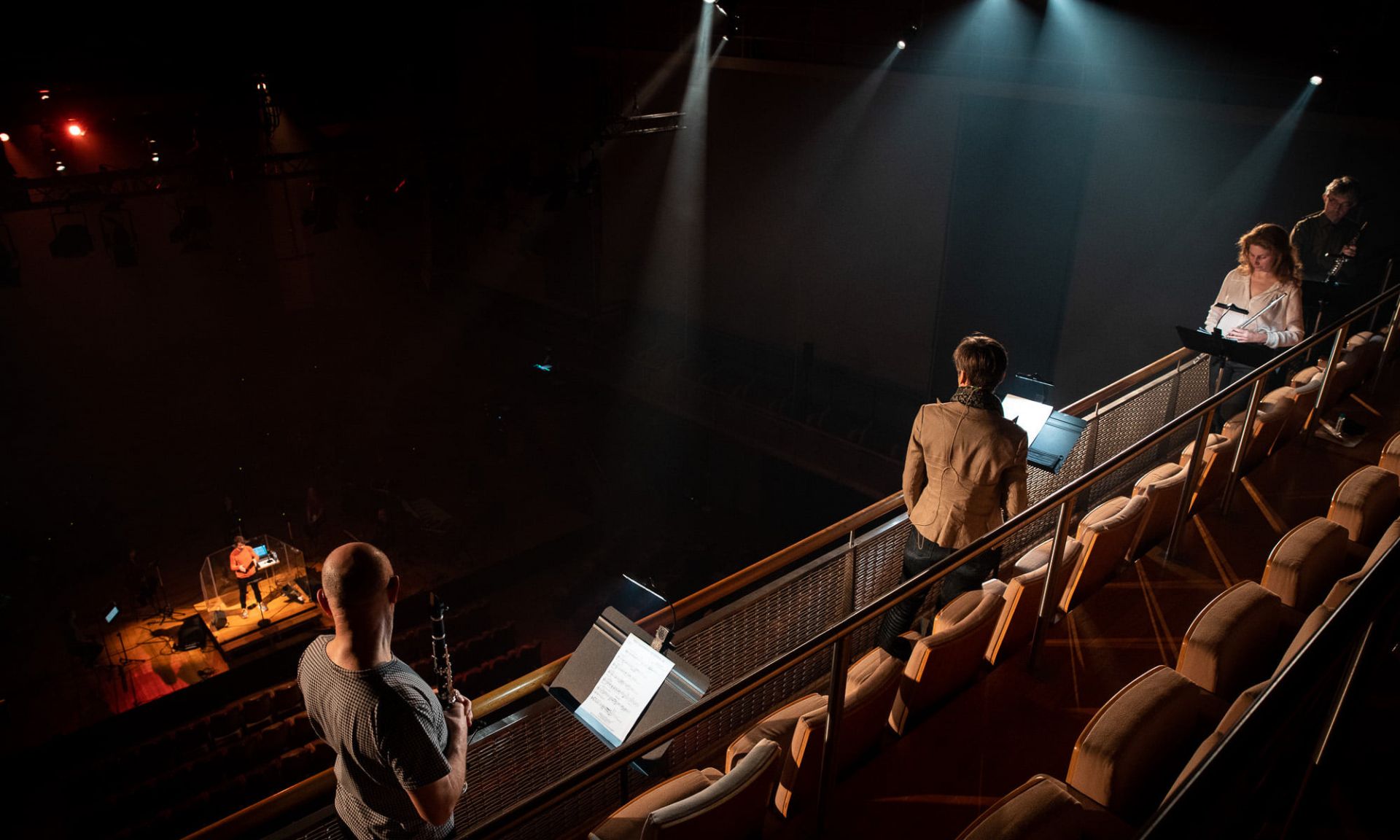
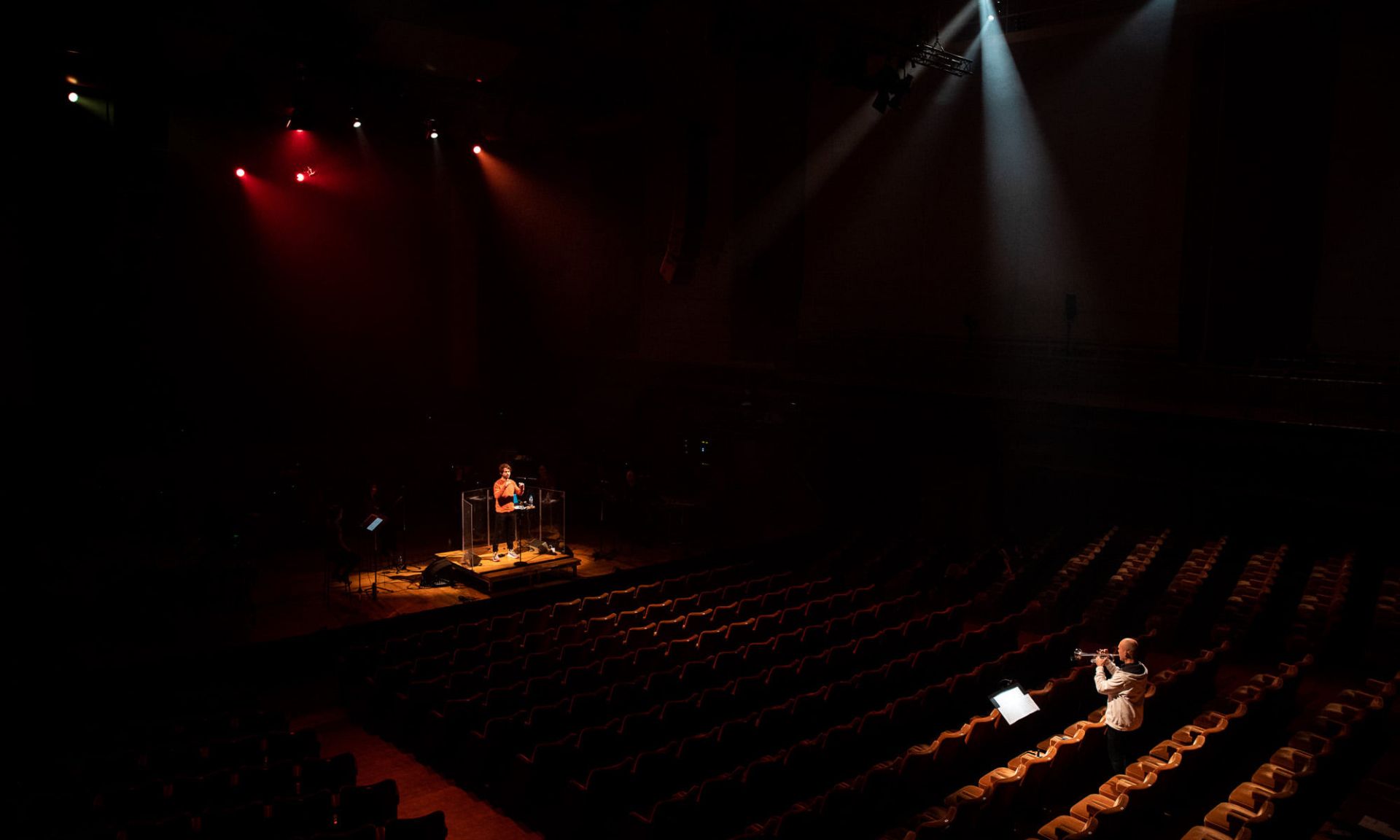
From the very first second, this 1908 strange and sublime work seizes the listener’s attention, and builds a narrative structure like a real ‘instrumental theatre’. An invisible string orchestra (replaced here with a quadraphonic recording that envelops the audience) emits a long, deeply repetitive, extremely slow series of chords. A solo trumpet facing the audience (as a representative of humanity) begins a phrase, like a question into space. Four woodwind instruments reply in a strange cacophony – no one really knows. The whole process repeats, ceaselessly. The work ends with a final unanswered question cast into the dark sky.
Composer and music critic Tom Johnson described The Unanswered Question as revolutionary, for three reasons: first, because it represents “the prophetic moment in history when Western music discovered the beauty of static repetitious processes”; then, it is the first score in which the exact coordination of different elements (or different ‘actors’) was not specified; and finally, it heralds the importance that broad space and three-dimensional listening would have in twentieth-century music. The piece sets the tone for the evening.
Scene II – Steve Reich: Proverb
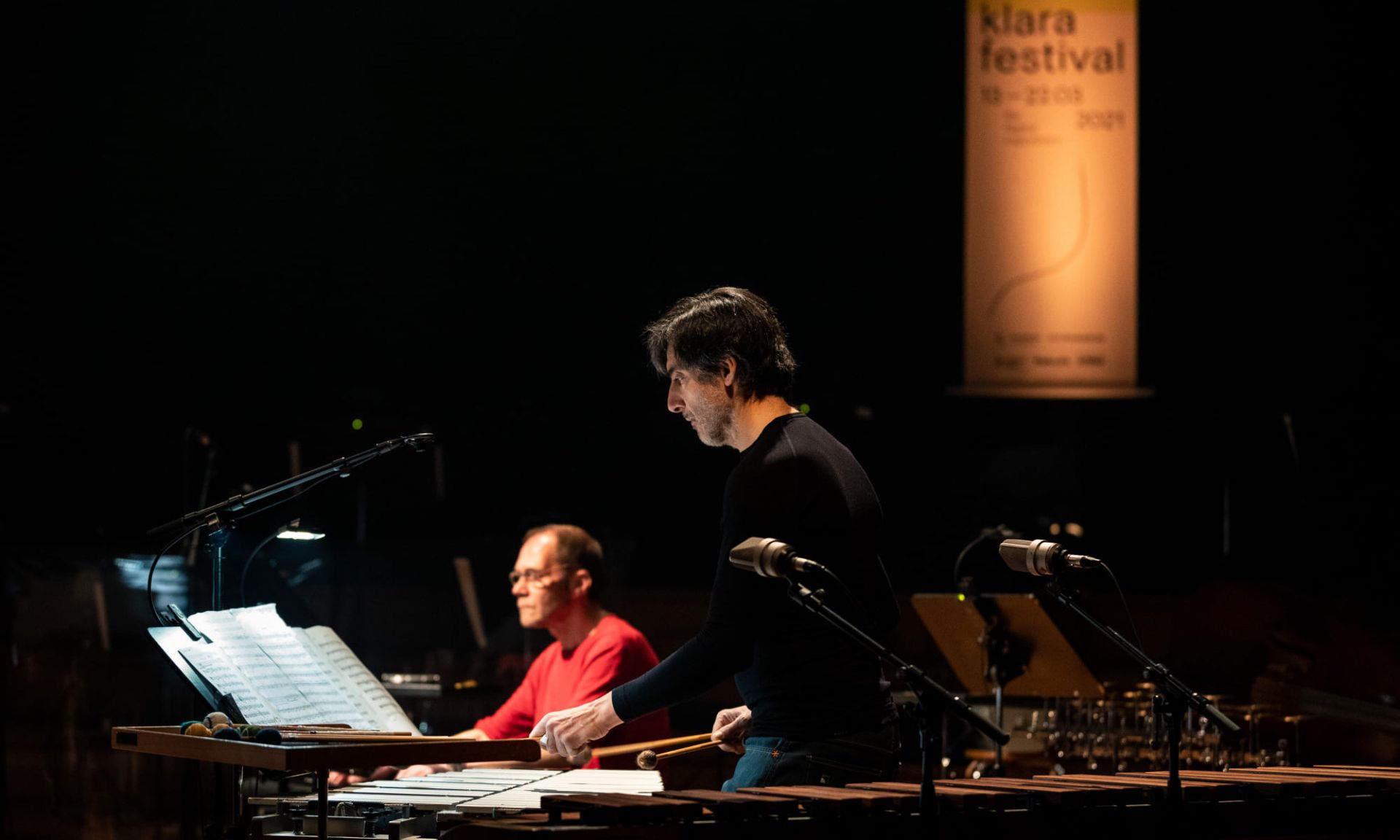
Proverb is a gem of simplicity and true expression, written by Steve Reich in 1995 for three sopranos and two tenors, accompanied by two vibraphones and two electric organs. The work is inspired by medieval polyphony and allows the melodies to submit humbly to the text, which consists of an aphorism by Ludwig Wittgenstein: “How small a thought it takes to fill a whole life!” In short, Proverb replies in music to the initial question that opened the concert.
Scene III – Gavin Bryars: The Sinking of the Titanic
A siren screaming in the night, the terrifying sound of the Titanic colliding with the iceberg...
... the music begins: the voices of survivors calmly recounting the disaster, music boxes tinkling in the night, while an ocean liner type band, its sounds lined with tones of velvet, plays the gentle harmony of hymns. An interesting British departure from American minimalism, less formalist than Philip Glass or Steve Reich, Gavin Bryars’ music often employs fictional or conceptual elements. In The Sinking of the Titanic, the composer tries to imagine how the band of the Titanic might have sounded, flawless in its dignity, playing on as the liner sank into the depths. Melancholy and black humour.
Scene IV – Steve Reich: Tehillim
While The Sinking of the Titanic tells the story of a shipwreck, the concert’s final scene will proclaim joy at the world’s beauty through the words of King David, set to music by Steve Reich. Its six percussionists (many of whom play the tambourine, in tribute to traditional Jewish culture), its almost brutal string chords, its complex canons of voice and woodwinds, Tehillim leads listeners step by step into a kind of intoxication, a rhythmic madness unprecedented in Reich’s work. The words of the Biblical psalms urge us to praise Creation by all means of song, drumming and dance – but they also warn humanity: May your lips not tell lies.
(Does this answer your question, dear Charles Ives?)
GALLERY

CAST & CREDITS
WORKS
- Tom De Cock, conductor
- SYNERGY VOCALS
- Micaela Haslam
- Caroline Jaya-Ratnam
- Rachel Weston
- Heather Cairncross
- Tenors in Proverb
- Benedict Hymas
- Gerard O’Beirne
- Chryssi Dimitriou, flutes
- Dirk Descheemaeker, clarinet
- Kristien Ceuppens, oboe
- Géry Cambier, double bass
- Jean-Luc Fafchamps, keyboards
- Jean-Luc Plouvier, keyboards
- Miquel Bernat, percussion
- Gerrit Nulens, percussion
- Ruben Orio, percussion
- Aya Suzuki, percussion
- Alexandre Fostier
- Antoine Delagoutte
CHARLES IVES: THE UNANSWERED QUESTION [1908, 6']
For string orchestra, solo trumpet and group of four wind instruments
STEVE REICH: PROVERB [1995, 15']
For five voices, percussion and electronic keyboards
GAVIN BRYARS: THE SINKING OF THE TITANIC [1972, 16']
For string ensemble and tapes (sounds, voices and recorded music)
STEVE REICH: TEHILLIM [1981, 32']
In four movements. For four voices, six percussionists and large ensemble
Concert without intermission. Total time: 70 minutes.