A WALK INTO THE FUTURE
A WALK INTO THE FUTURE
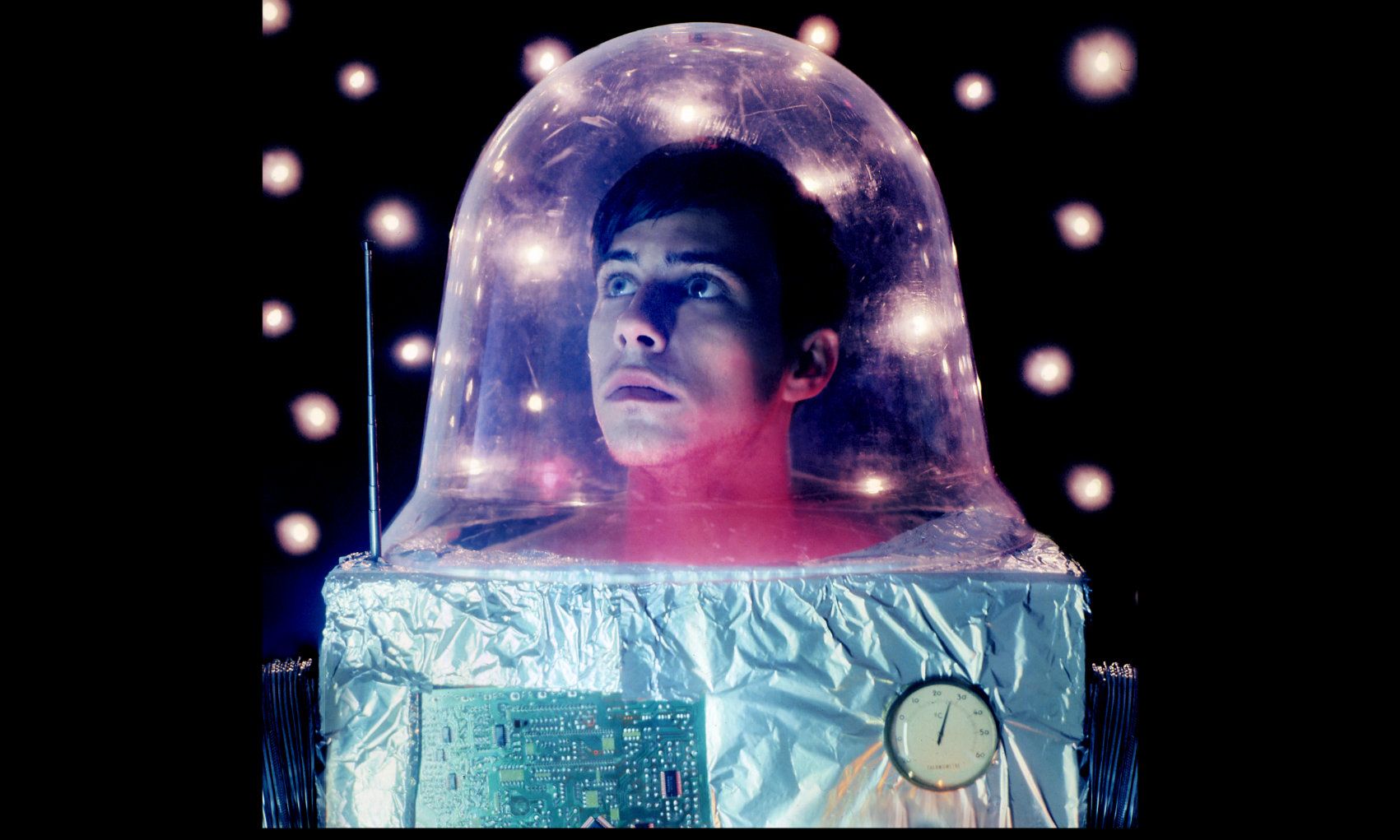
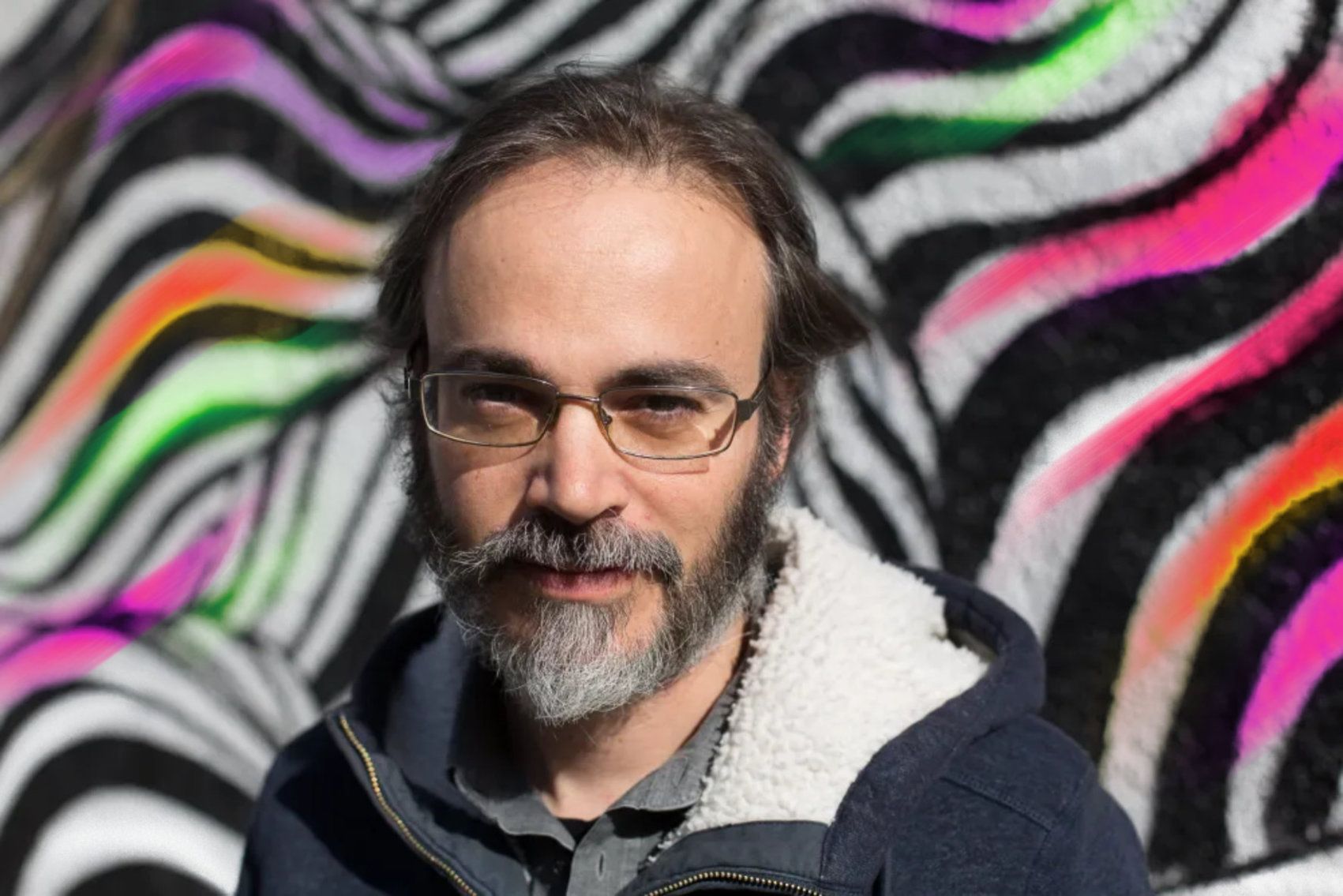
Ilan Volkov,
former conductor of the BBC Scottish Orchestra and curator of the amazing cross-stylistic Tectonics Festival, is an irrepressible bundle of energy and all-round scholar who is equally comfortable in experimental, classical or underground music.
Together with the Brussels Philharmonic and Ictus musicians, he has come up with a multi-faceted and sci-fi-oriented evening from cosmic vertigo to futuristic kitsch.
Cassandra Miller
was born in 1976 in Canada, and lives in London. She studied composition with Christopher Butterfield, Richard Ayres and Michael Finnissy. We want to give this composter a warm welcome; we guarantee you’ll hear from her again! In fact, the Brussels Philharmonic has commissioned her for a new work. The Guardian has listed her compositions among its ‘Best classical music works of the 21st century’, while the New York Times describes her music as 'sweet, slightly surreal'. Cassandra Miller revisits the minimalist aesthetic with unprecedented softness and vulnerability. Her music seems to simulate the workings of our memory – what happens when a single musical reminiscence, something vague, fragile and luminous, picks its way through our minds in successive loops? Her creative process is built around transcription and mimicry techniques: a musical element is examined, transcribed, transposed... and finally transfigured.
Round
is written for a large orchestra, with four trumpets positioned on the balconies. The work was premiered in 2016 by the Toronto Symphony Orchestra. 'The melody used here is a replication of Catalonian cellist Gaspar Cassadó’s recorded performance of Tchaikovsky’s Valse Sentimentale. The transcription reproduces Cassadó's entrancingly idiosyncratic pushing-and-pulling of tempo and phrase', wrote Cassandra Miller. On the subject of Round, she also quoted a paragraph from Gilbert Rouget’s Musique et Transe:
For when have children who suffer from insomnia, lull them to rest, they use movement, not immobility; they rock them ceaselessly in their arms; they bring them melody, not silence … The reason, says Plato, is that “our sufferings are, in short, just frighs; frights that result from a defective disposition of the soul”. So, if we apply an external jolt to this kind of suffering, the external movement overcomes the internal movement of fear and folly, and in so doing produces a manifest calm in the soul and a cessation of the grievous palpitations of the heart.
Tom De Cock and Gerrit Nulens
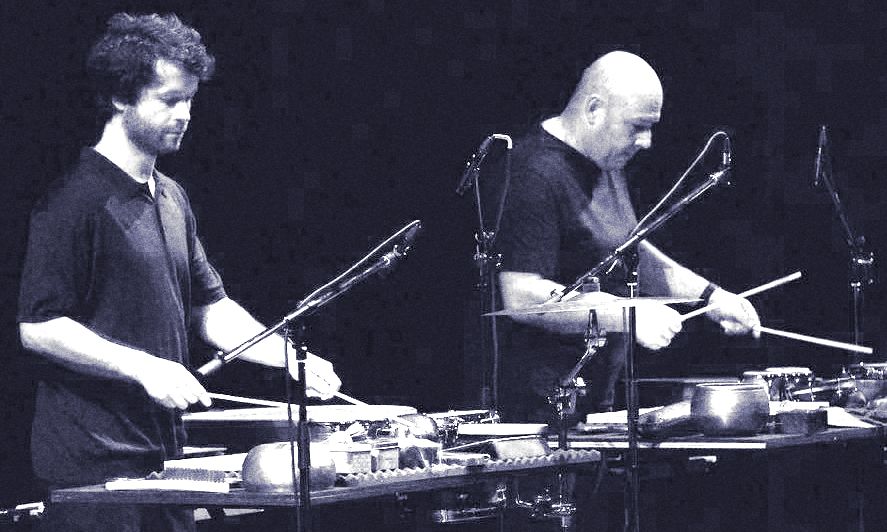
are both percussionists in the Ictus ensemble.
The ‘micro-percussion’ concept was designed by Tom De Cock as a complete percussion kit, able to fit on a table and travel in a suitcase. It is amplified by spot microphones. The project was developed with the support of the PDR-FRArt research fund. In 2018, Noé Soulier approached Ictus to conduct dance-music research, from which the Waves performance emerged. On that occasion, the two percussionists and Noé Soulier experimented with collective composition, based on the development of a lexicon of short ‘phrases’, both musical and physical. All the phrases are linked to three specific actions: hitting, throwing and evading a blow. 'It’s been ages since we last discovered something so wonderful, singular, strange and new in contemporary dance,' Wiebke Hüster wrote of this performance in the Frankfurter Allgemeine Zeitung. Tonight’s purely instrumental version has been specially reworked for the concert.
Øyvind Torvund
was born in 1976 in Porsgrunn, Norway. While studying classical music in Oslo and Berlin, he played guitar in rock and improvisation bands. His music assembles disparate materials: rock genre sounds, and sounds from nature and from everyday life coexist with writing in a deliberate combination of seriousness and humour where ‘nobility’ rubs shoulders with ‘rubbish’. Categories are split open or blurred, habits undone. 'Contrasts, juxtapositions and completely opposite perspectives interest me because I believe that there is a lot happening beneath the ordinary musical framework, and many unconscious forces to explore.'
A Walk into the Future,
for orchestra and sample playback, was written in 2019. It is the second part of a diptych of Two Symphonic Poems, commissioned and premiered by the Oslo Philharmonic. As in any self-respecting symphonic poem, the music describes the encounter between ‘great men’ and 'great landscapes'. But a strange modernism clouds the programme – a ‘retro-futuristic’ modernism, one might say, as seen through the eyes of a child. The composer describes it in deliberately naive terms: 'A simple, childish idea: a drum march with a whistled melody — we're setting off on a hike! Along the way, the hikers encounter abstract shapes, robots, and many foreign and unknown things. They have a positive attitude, but the vision of the future we are presented with is not entirely bright and cheerful.'
George Friedrich Haas
was born in 1953 in Graz, Austria. He studied composition with Gösta Neuwirth and Friedrich Cerha (the 'Austrian Ligeti'). G.F. Haas developed a very particular sound, inspired by French spectralism, the music of Giacinto Scelsi and the microtonal theories developed by Ivan Wyschnegradsky in the 1930s. Haas aims to 'compose sound as such'; as he puts it: to treat it as a mass or a flow in order to achieve dramatic effects. He uses non-tempered intervals ('microtones') to distort the harmony, to colour it, to make it brighter or darker, according to his artistic needs. Like Scelsi before him, Georg Friedrich Haas also uses 'acoustic beats' produced by very close frequencies to create an effect of gravity and depth, which irresistibly evokes a great cosmic expanse. His work can therefore be seen, in the tradition of Alexander Scriabin, as possessing a transcendental aspiration. In 2016, Haas created a radical and stunning opera, Koma, whose final part is performed in total darkness, inviting the audience to identify with a woman as she slips into a state of clinical death, while the music gradually slows into complete silence.
Concerto Grosso No.2 (2014)
The concerto grosso, a Baroque form born in the early 18th century, brings together an orchestra and a group of soloists known as a 'concertino' (rather than a single soloist, as in the classical concerto). The most famous of the concerti grossi are J.S. Bach’s Brandenburg Concertos 2, 4 and 5.
Here, the concertino consists of fifteen soloists – musicians from the Ictus ensemble and four players from the Brussels Philharmonic (bassoon and brass). Much of the work hinges obsessively around a C bass note, as still and icy as a marble column – reminiscent of Gérard Grisey’s Acoustic Spaces and the experiments of drone music. But the stillness is challenged and undermined by the inner life of the sound, its ‘turbulence’. To express these turbulences within the One, various techniques come into play: quarter tones, sixth tones and twelfth tones (each soloist is equipped with an electronic tuner), improvisations on harmonics, the use of different simultaneous tempos, lead mutes for the strings, and a very subtle collection of vibrato qualities or repeated notes. The work was commissioned by BBC Radio 3, and premiered by Ilan Volkov at the 2014 Tectonics Festival.
GALLERY
CAST & CREDITS
WORKS
Cassandra Miller: Round, 2017
for orchestra, with 4 trumpets in the space
De Cock, Nulens, Soulier: Waves, 2022
for micro-percussion, performed by Tom De Cock and Gerriut Nulens
Øyvind Torvund: A Walk into the Future, 2019
for orchestra and samples
Georg Friedrich Haas: Concerto Grosso N°2, 2014
for chamber ensemble and orchestra