Vortex Temporum (with Rosas)
Vortex Temporum (with Rosas)
° Except nothing in this music is arbitrary, and you can only marvel at the prowess and rigor of the musicians, playing through this thicket of complexity without a score or a conductor. (The New York Times)
° La conspiration magique de la musique et de la danse atteint un niveau rare d'équilibre. (Le Monde)
° We zagen maar heel zelden een werk van deze finesse en pracht. Ook niet bij Rosas. Dit is gewoon buiten categorie. (De Morgen)
VORTEX TEMPORUM | New Rosas production
Choreography: Anne Teresa De Keersmaeker | Music: Gérard Grisey
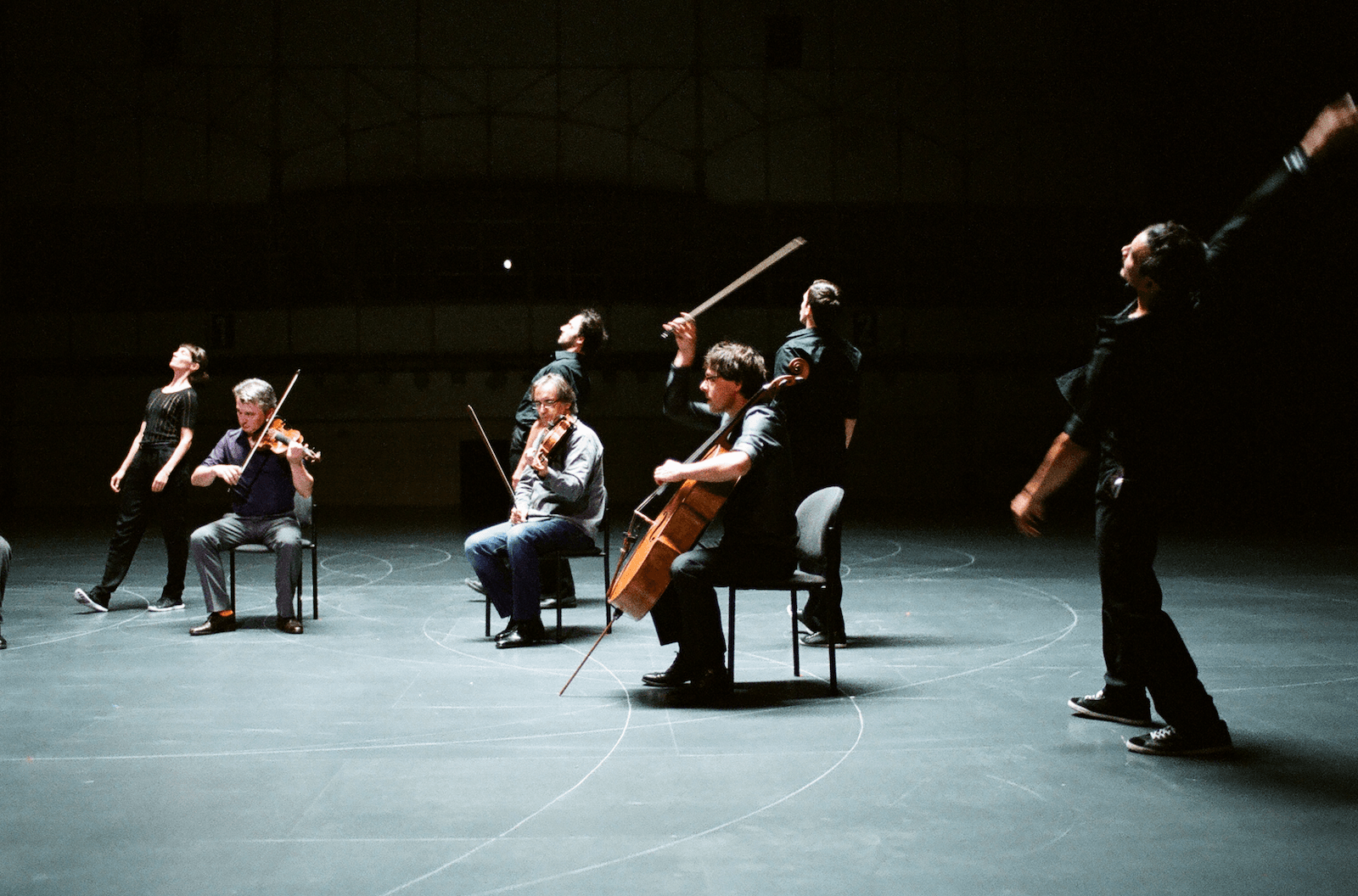
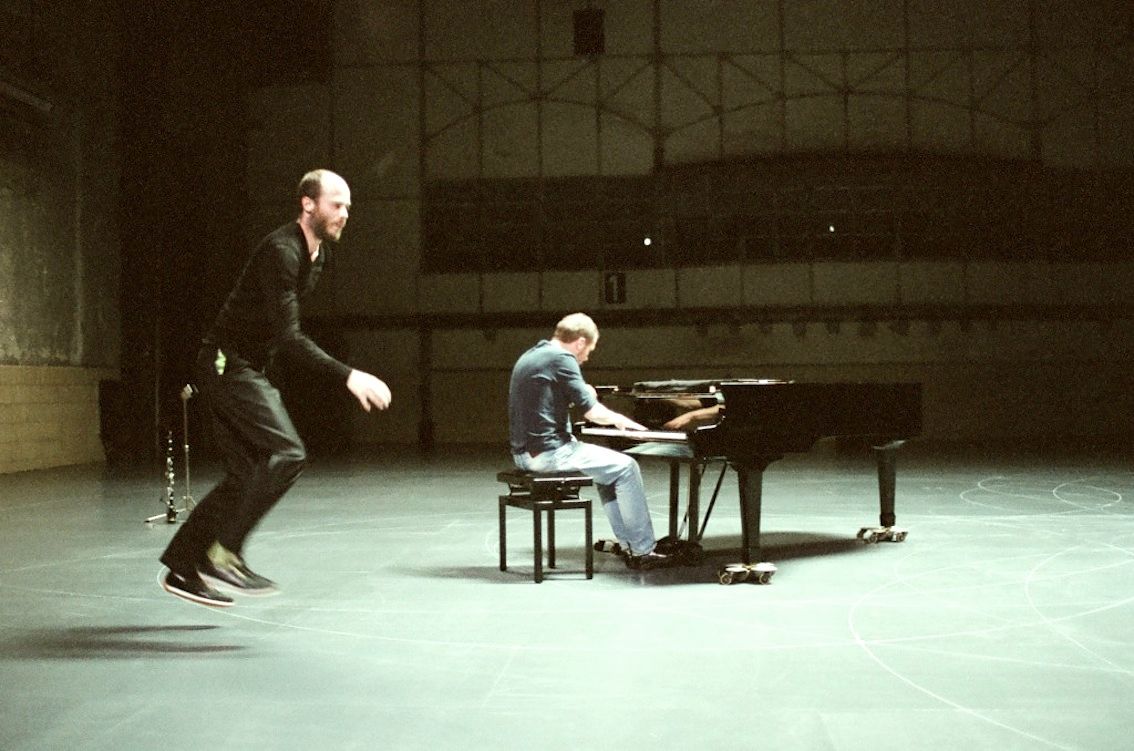
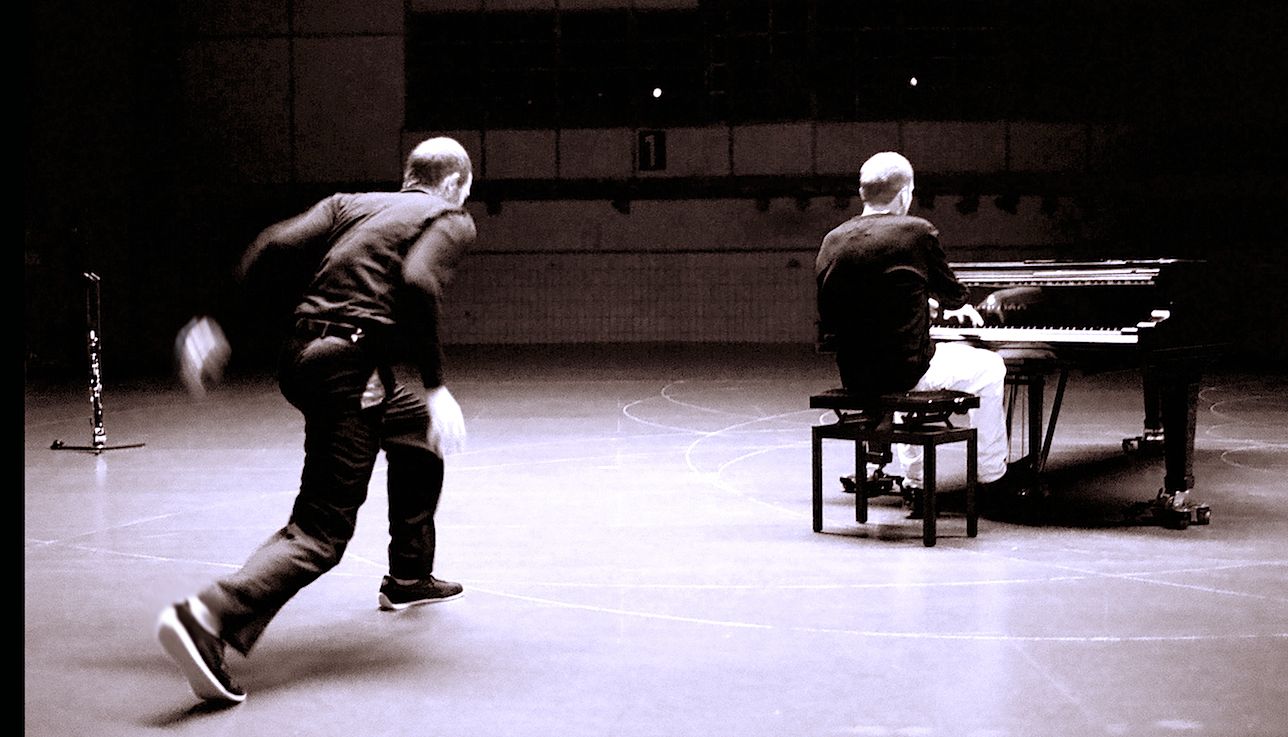
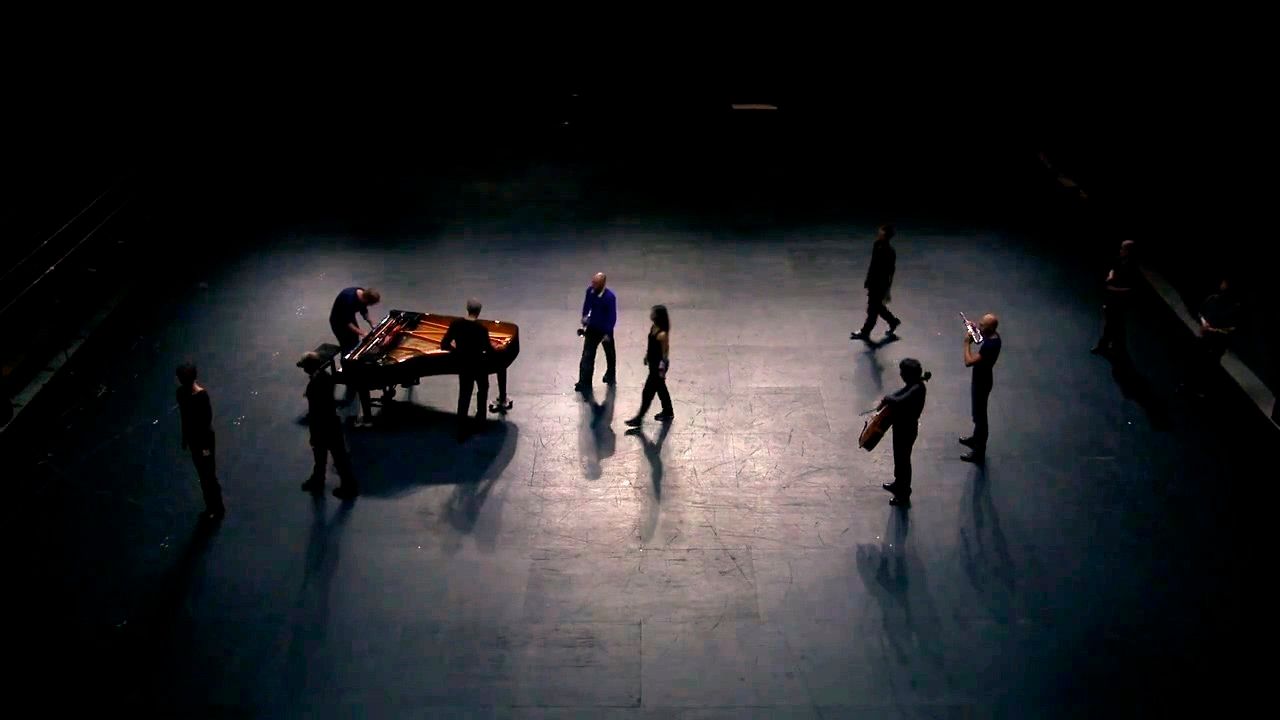
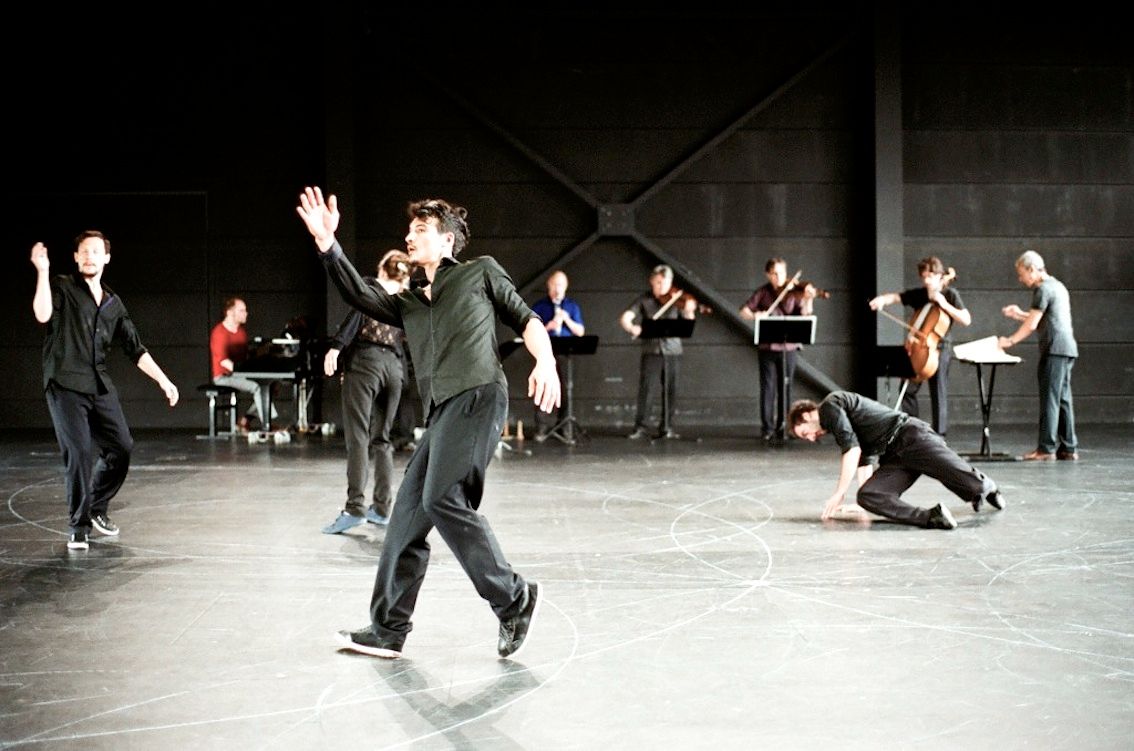
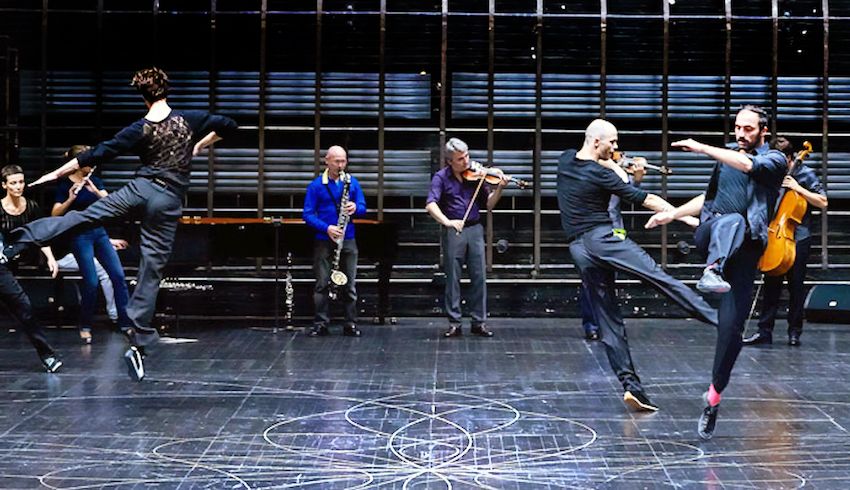
Seven Rosas dancers and seven Ictus musicians, intermingling on stage, to perform Gérard Grisey's magical sextet: Vortex Temporum, "the whirlpool of times". This work of a master from the late 20th century (1996) draws its inspiration from the rhythmic loops of the American minimalists, the symbiotic harmony of French music, the robust architectural approach of the German classical period.
Rethinking the minimalism of her early days, the choreographer Anne Teresa De Keersmaeker is delving deeper into the almost esoteric resources of forms and numbers. Substractive enthusiasm for the sparse, assertive enthusiasm for the numerical: here she is at 50 years of age at the height of her powers in terms of a stripped-down art.
VORTEX is a moving cathedral of spiral shapes embedded into one another. Moving in time to Grisey's music, the dance experiments with a contrapuntal variety of speeds: the time spent sleeping and dreaming, infinitely slow like the actual breathing of the universe (what the composer chooses to call "the time of whales"); human measured time, attuned to language, the footstep, the heart rate; and, lastly, the compressed time of birds and insects, keen as a flame, faster than the eye can perceive. A tempo dance: the lengthy transformation of matter, the regulated time of the expression, the short-circuit of ecstasy.
GERARD GRISEY's NOTE
The title Vortex Temporum indicates the beginning of the system of rotation, repeated arpeggios and their metamorphosis in various transient passages. The problem here is to enter the depths of my recent research on the use of the same material at different times. The three basic forms are the original event – a sinusoidal wave – and two continuous events, an attack with or without resonance as well as a sound held with or without crescendo. There are three various spectra: harmonics, ‘stretched disharmonics’ and ‘compressed disharmonics’; three different tempos: basic, more or less expanded, and more or less contracted. These are the archetypes that guide Vortex Temporum.
In addition to the initial introductory vibration formula taken directly from Daphnis et Chloe, ‘Vortex’ suggested to me harmonic writings focused around the four tones of the diminished seventh chord, a rotational chord par excellence. Treating each of these tones as leading ones, we obtain the possibility of multiple modulations. Of course, we aren’t dealing here with the tonal system but rather with considerations of what might still be relevant and innovative in this system. The chord about which I’m speaking is thus a common part of the three previously written spectra and determines other displacements.
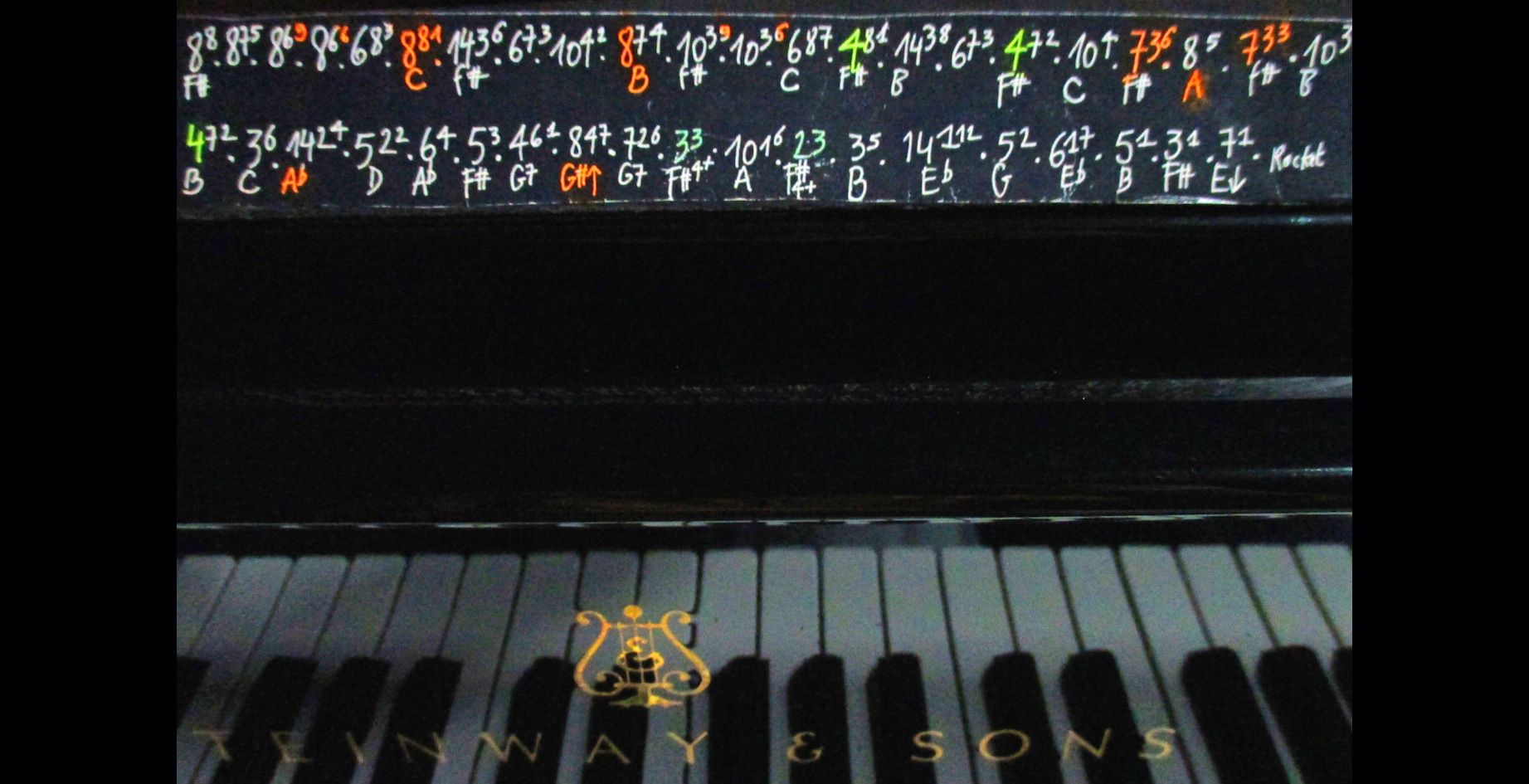
The piano used in the work is tuned a quarter tone lower, which changes the sound of the instrument, at the same time facilitating the integration within microintervals, which are essential in this work. In Vortex Temporum the three archetypes described above revolve around one fragment and the other in temporary intervals, differing among themselves as among people (the tempo of speech and breathing), whales (spectral time of sleeping rhythms), and birds or insects (extremely contracted time, whose contours become obliterated). Thanks to this imagined microscope, the notes become sound, a chord becomes a spectral complex, and rhythm transforms into a wave of unexpected duration.
The three portions of the first part, dedicated to Gérard Zinsstag, develop three aspects of the original wave, well known to acoustic engineers: the sinusoidal wave (vibration formula); the square wave (dotted rhythm) and the jagged wave (piano solo). They develop the tempo, which can be defined as ‘joyful’, the tempo of articulation, rhythm of human breathing. The isolated piano section reaches the boundaries of virtuosity.
The second part, dedicated to Salvatore Sciarrino, approaches the same material in expanded time. Initial Gestalt appears here only once, spreading throughout the entire part. I tried here to create the feeling of the confused speed inside the slow tempo.
Part three, dedicated to Helmut Lachenmann, introduces a long process allowing the creation of interpolation, which appears between the various sequences. Continuity gradually establishes, and expands, finally becoming a kind of widely conceived projection of the events from the first part. The spectra originally developed in the harmonic discourse of part two expand here to an extent degree, enabling the listener to detect the structure and entrance into other time dimension.
Short interludes are planned between the parts of Vortex Temporum. A few breaths, noises and discrete noises colour the awkward silence, and even the discomfort of the musicians and listeners, who hear their own breathing between he parts. Treating waiting time this way, linking the time of the audience with the time of the work, refers to some of my earlier works, for example Dérives, Partiels or Jour, Contrejour. Here, of course, these tiny noises are allied with the morphology of Vortex Temporum.
Overthrowing the material in favor of pure endurance is a dream, which I have been carrying out for many years. Vortex Temporum is perhaps only a history of the arpeggio in time and space – from the point of view of our ears.
Vortex Temporum was commissioned by the French Ministry of Culture, Ministerium für Kunst Baden-Würtemberg and the Westdeutsche Rundfunk Köln, at the special request of ‘Ensemble Recherche’.
Gérard Grisey
PRESSKaaitheater
GALLERY