MITRA
MITRA
IN SHORT
MITRA
is a hybrid project situated somewhere between opera, documentary cinema and installation.
In 60 minutes and on two screens, it presents the struggle of real individuals living in Iran and France, who are caught up in the psychiatric machinery. A woman and a few friends, fight together and from afar, through the unique power of words exchanged via email, to escape obliteration. Their truth, however, only finds its true expression when it’s turned into fiction and put to music.
MITRA
will be brought to life on stage (as laid out in this text) and in a feature-length documentary, as different in its length as it is in its narrative style.
MITRA
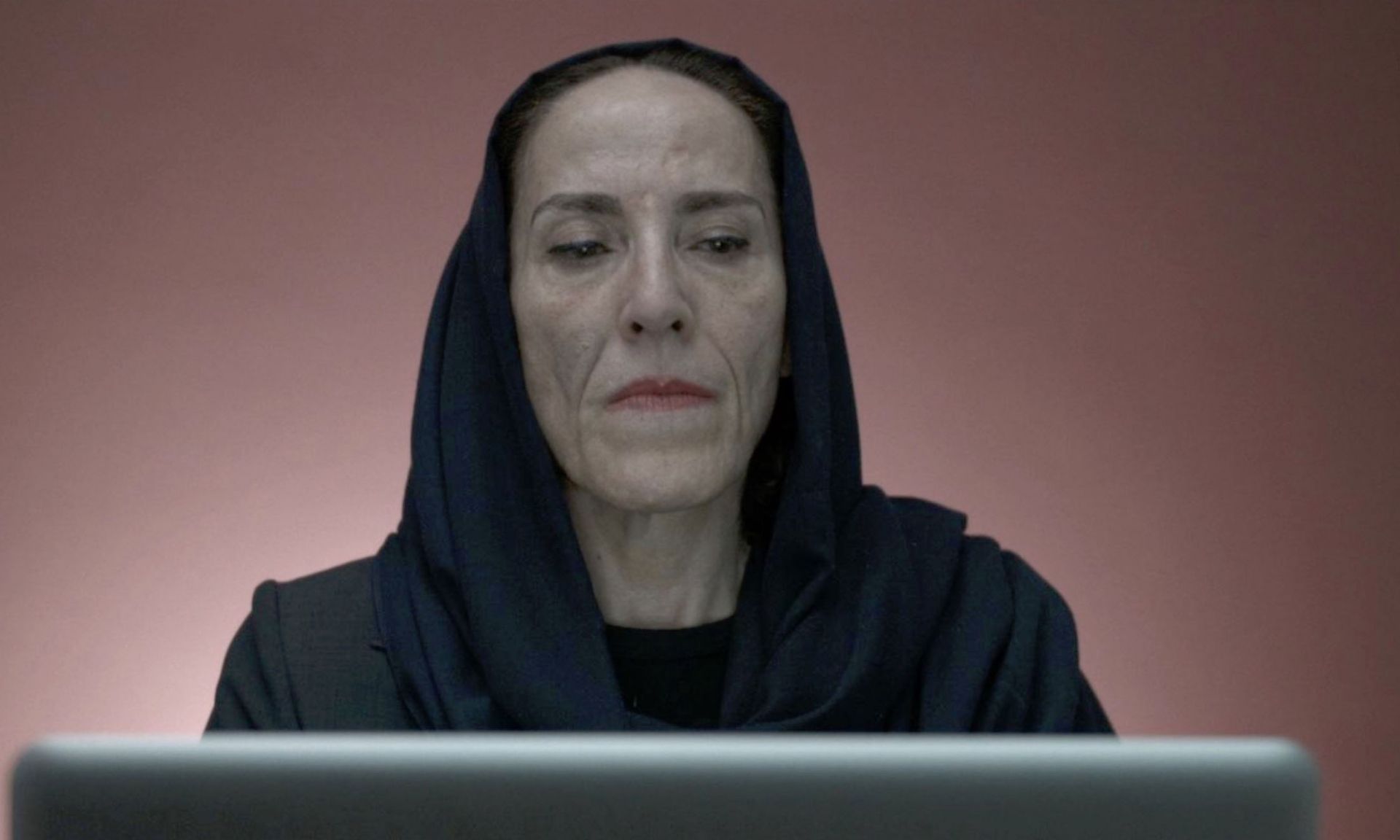
is the first name of Mitra Kadivar, a psychoanalyst from Teheran whose problems with Iranian psychiatry have recently hit the news. Beyond current affairs, it is the intensity of Mitra’s bravery, the uncompromising singularity of the stands she has taken, the almost antique beauty of her face marked by the trials which are at the very heart of the project; this intensity, this individuality, this beauty make it possible to be reunited, on a narrow ridge somewhere between documentary and fiction — and in music — with a certain tragic figure of female heroism.
The project is based around a hotly debated centre: psychological suffering and psychiatric confinement. Several themes crop up around this core:
- The determination and solitude of a rebellious woman.
- Solidarity as part of a network, and from afar.
- The voices — these voices which swirl around like swarms (the choir of psychiatrists, the choir of students, the choir of patients).
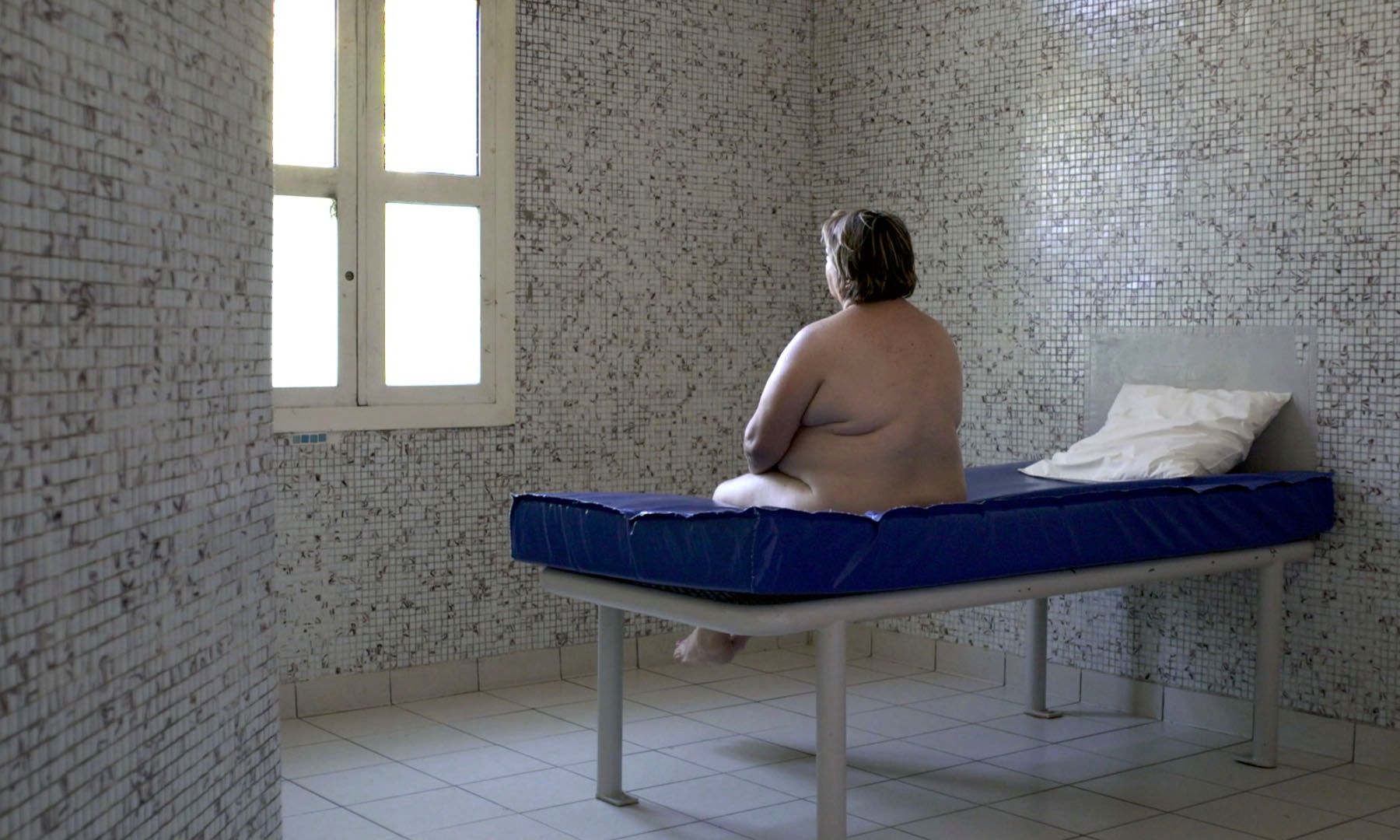
And finally spaces: the theatre, opera, psychiatric hospital, places where passions are played out.
BRIEFING NOTE
by Jorge León
The proposition
The story could be summarised like this:
Mitra Kadivar is an Iranian psychiatrist and psychoanalyst who studied in France. When she went back to Tehran, she set up a school of psychoanalysis and planned to turn her private home into a drop-in centre for drug addicts. Her neighbours weren’t having it and pressed charges against her, claiming that she was mad: her behaviour is strange and she claims to be constantly disturbed by the noise of an imaginary child running around upstairs.
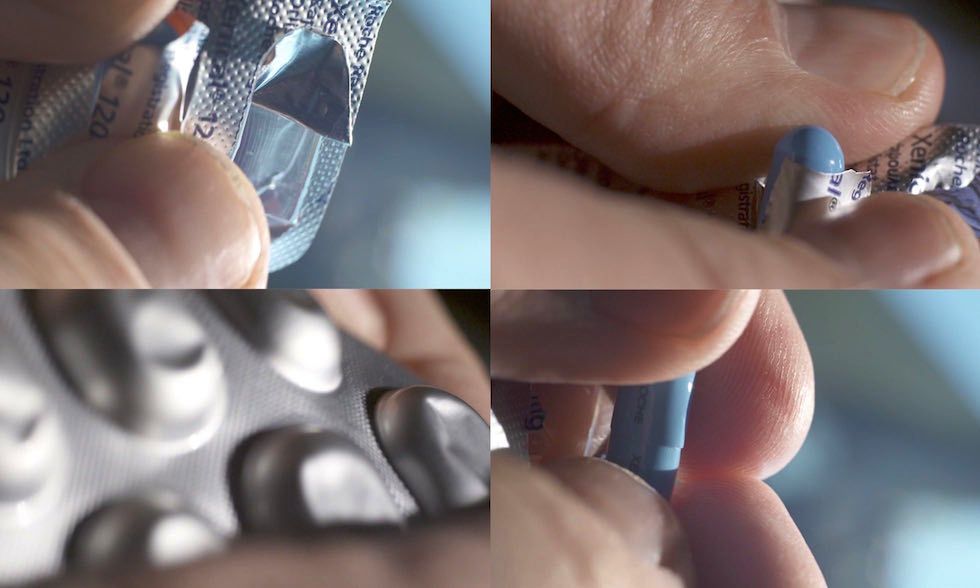
Confined to a mental hospital and diagnosed as psychotic, Mitra ends up undergoing a treatment of medical injections. Alerted by a series of emails exchanged with her, Jacques-Alain Miller tries, from France, to come to her aid. When she is confined to a mental hospital and the Iranian psychiatrists prevent her from going on the Internet, her students continue the correspondence with Miller: they give him news of Mitra and tell him about their efforts to clear her of the charges made against her. The digital exchanges are transformed into the voices of a choir. A petition to free Mitra is launched from France. She is finally set free.
The emails exchanged will form the libretto. What interests me most when moving towards the cine-opera documentary, is to go beyond the present of the event, to give it a universal scope, until you are deploying it in the timelessness of the myth.
In order to give a lyrical voice to Mitra Kadivar, we chose Claron Mc Fadden, a magnificent world-renowned singer, familiar not just from the operatic repertoire but also contemporary music and open to new vocal experiences.
The Set
Two screens measuring approx. 8 m by 4.5 m in height will form an angle inside which the spectators will be able to move around and make themselves at home. The ground will be covered with carpet, the designs of which will evoke, all the while transforming it, the aesthetics of Persian tapestry. Spectators will be able to lie down on these carpets if they want to or sit down on the seats or benches to blend into the patterns on the ground.
The sound will be spatialised in accordance with this space (with the expertise of GMEM). There won’t be any musicians on stage, the voices and music will be pre-recorded and mixed in this new venue in the very heart of the “Friche de Mai”.
Yet, Mitra as a physical presence should appear to the spectator.
Claron Mc Fadden will come on stage to perform two arias of a few minutes. Her rapid intervention should produce the effect of a hallucination with the spectator.
Other documentary dimension
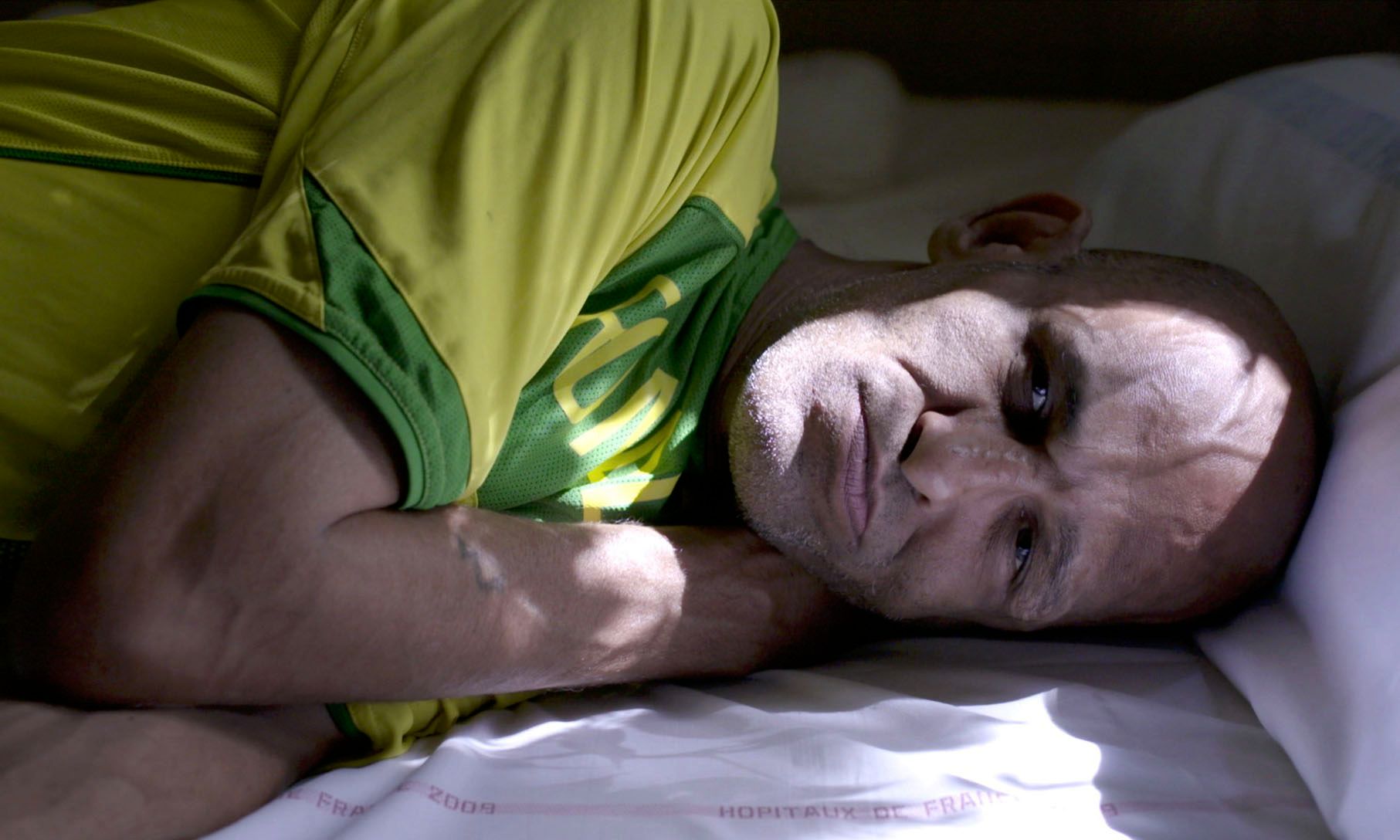
The Hospital — During two writing residences at the Camargo Foundation in Cassis, partner of the project, we were lucky enough to discover the Montperrin Hospital in Aix-en-Provence, an incredible place and psychiatric complex, providing a clear resonance with the history of Mitra. The encounters with the residents of the hospital were so intense that it became impossible to think of the opera independently from its creation process. In the course of workshops organised within the Montperrin hospital, I would like the residents (and their carers) to come into contact with Mitra’s tragedy, film their reaction, provide support to their emotions when it’s time to sing Mitra’s SOS, put to music.
In parallel with the story of Mitra, for me it’s about showing the artists at work, in other words writing, rehearsing or recording the lyrical work, but also in moments of reflection and discussion as regards Mitra’s story and its performance: exchanges between the composers, stage designer, singers and musicians...
Jorge León, 2016
JORGE LEÓN
Jorge León was born in Charleroi (Belgium) in 1967.
He studied Image at the Institut National Supérieur des Arts du Spectacle, Brussels where he was visiting professor in 1995, 1996, 1997, 2014 and 2015.
FILMS directed (a selection)
❖Before We Go, 2014. International Critic Prize at IndieLisboa 2015. Étoiles de la Scam 2015. 2014 Scam/SACD Prize for the best documentary. World premier: FIDMarseille July 2014 (International competition, two prizes). National release in France in autumn 2015
❖Vous êtes Servis, 2010. Cinéma du Réel, Paris, France, March 2010. Special award from the Librarian Jury. International Environmental Film Festival, Paris, France, November 2010. Special Jury Prize Filmer le Travail, Poitiers, France, February 2011. “restitution du travail” award
I’ve seen films, International Film Festival, Milan, October 2010. More than twenty selections in festivals.
❖10min. [video 19 min, 2009]. Huesca International Film Fest, Spain, 2009. Best documentary prize short selection DocLisboa, Portugal, 2009. Best documentary prize short selection
GALLERY
CAST & CREDITS
- Eva Reiter
- George van Dam
- Gerrit Nulens, percussion
- George van Dam, violin
- Eva Reiter, Paetzold recorder, bass viol
- Georges-Elie Octors, musical supervision
- Polina Bogdanova, coach
- Hanna Al Bender, sopranos
- Gwendoline Blondeel, sopranos
- Raphaële Nsunda Nluti, mezzo-soprano
- Logan Lopez Gonzalez, countertenor
- Pierre Derhet, tenor
- Kamil Ben Hsain Lachiri, baritone
- Isabelle Dumont, Dramaturgy
- Thibaut Van Craenenbroeck, Stage design & costumes
- Aliocha Van der Avoort, Video editing
- Peter Quaesters, Light design and technical direction
- Alexandre Fostier, Sound engineer