About Time Capsules
GALLERY
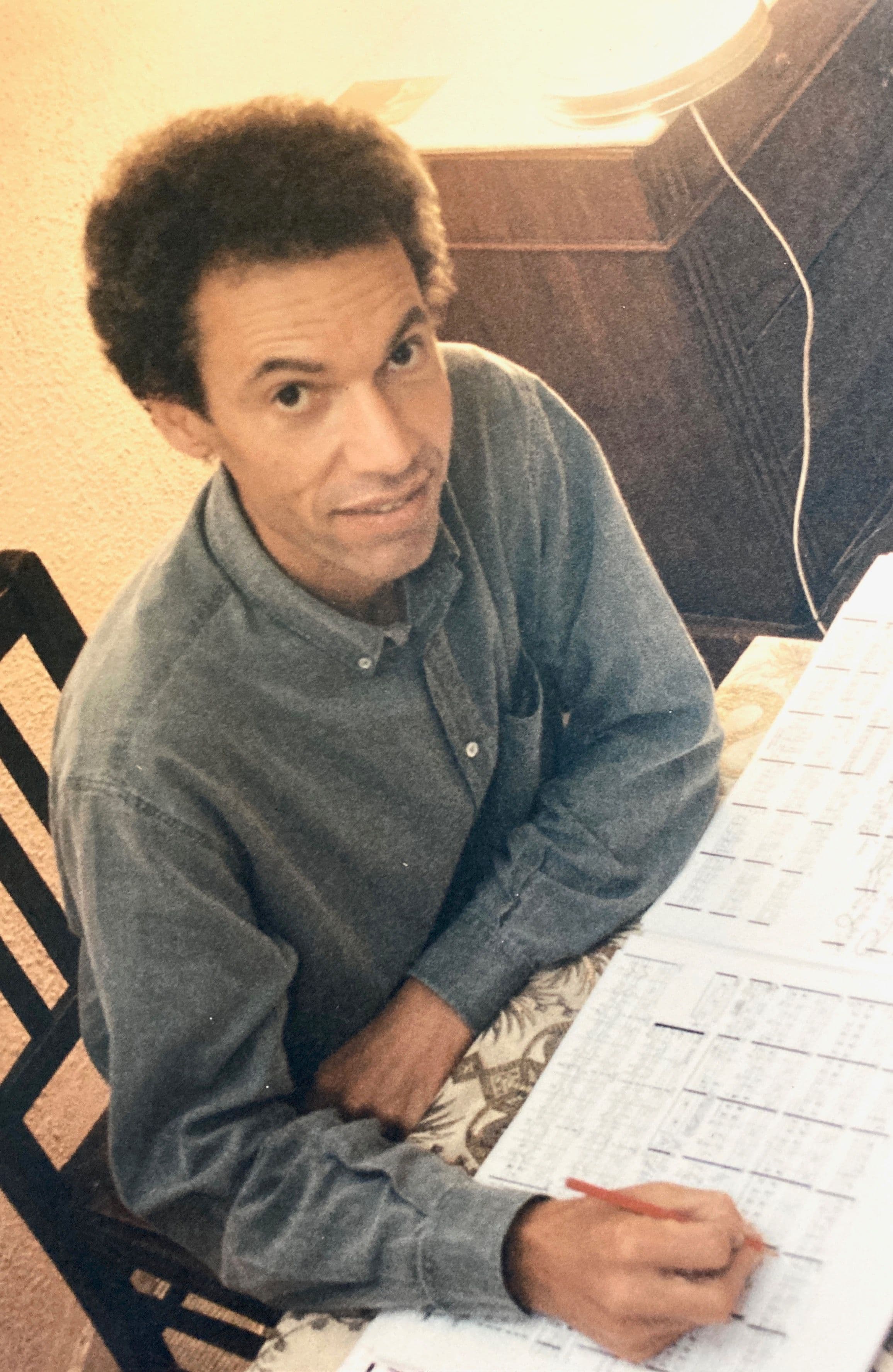
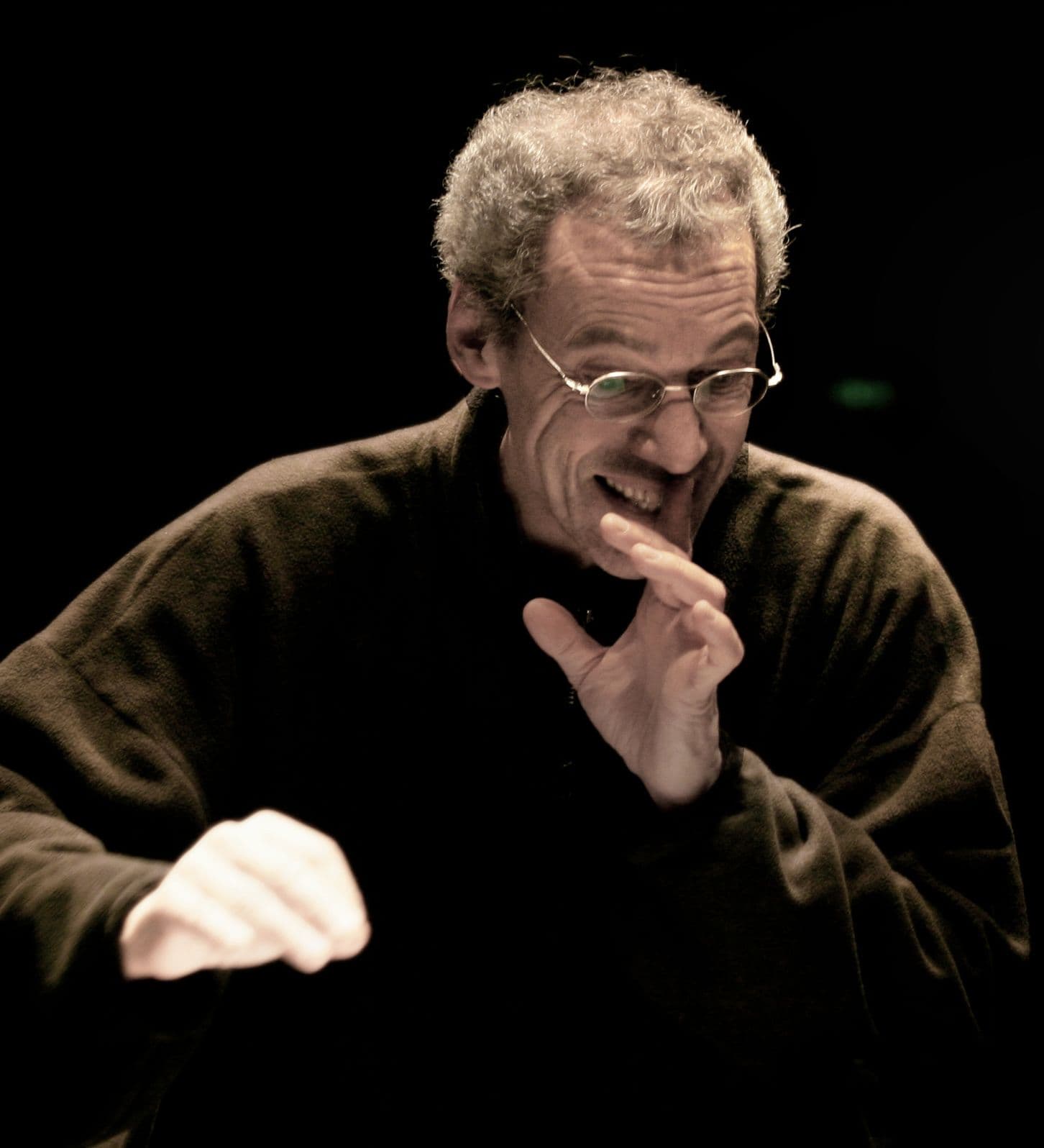
The Time Capsules are little forays into Ictus history, going back to the years 1994-2019, when Georges-Élie Octors was our musical director. We’ve been rummaging through the archives: digitising the scores he annotated by hand, digging up photographs and emails, and talking to a few friends… Each capsule revolves around a piece Georges-Élie particularly loved, or one he conducted in a particularly memorable way, and takes us behind the scenes.
Georges-Élie was a brilliant percussionist in his younger days, and this left its mark on his conducting style, the musicians he brought into the ensemble, and even the way we programmed our concerts. Tracing the history of his favourite works is, in a way, also a journey through our own history.
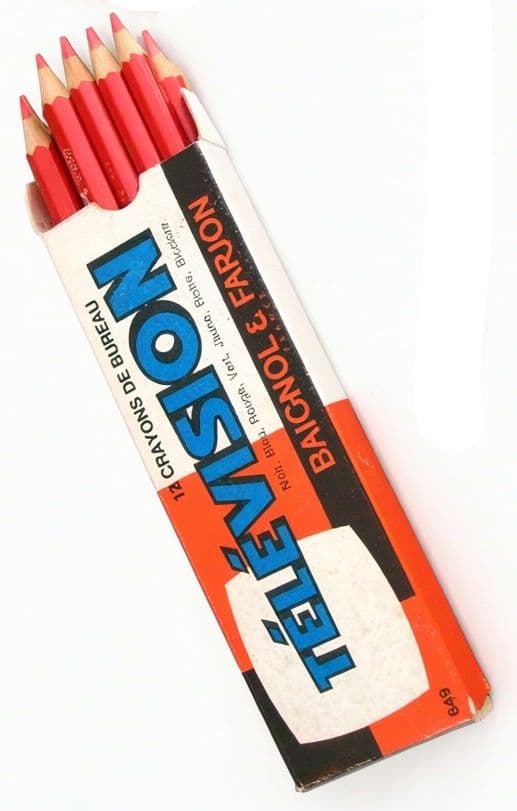
Georges-Élie was famous for his obsessive attention to detail. His scores were covered in annotations, made with an impressive arsenal of coloured pencils and markers. He never went anywhere without his blue-and-red ‘Television’ pencil (Baignol & Farjon, model 649). And when a colleague was really cross with him, the most heinous act of revenge was simply to nick his ‘Television’ pencil.
(This is no laughing matter! We explain below why meticulousness and grand romantic vision are not opposites, but in fact make excellent allies.)
The ScoreFollowers we’re publishing, which let you follow along with the sheet music while listening to the piece, based on Georges-Élie’s original scores, are therefore gloriously colourful affairs. We hope you’ll enjoy exploring them!
A brief portrait
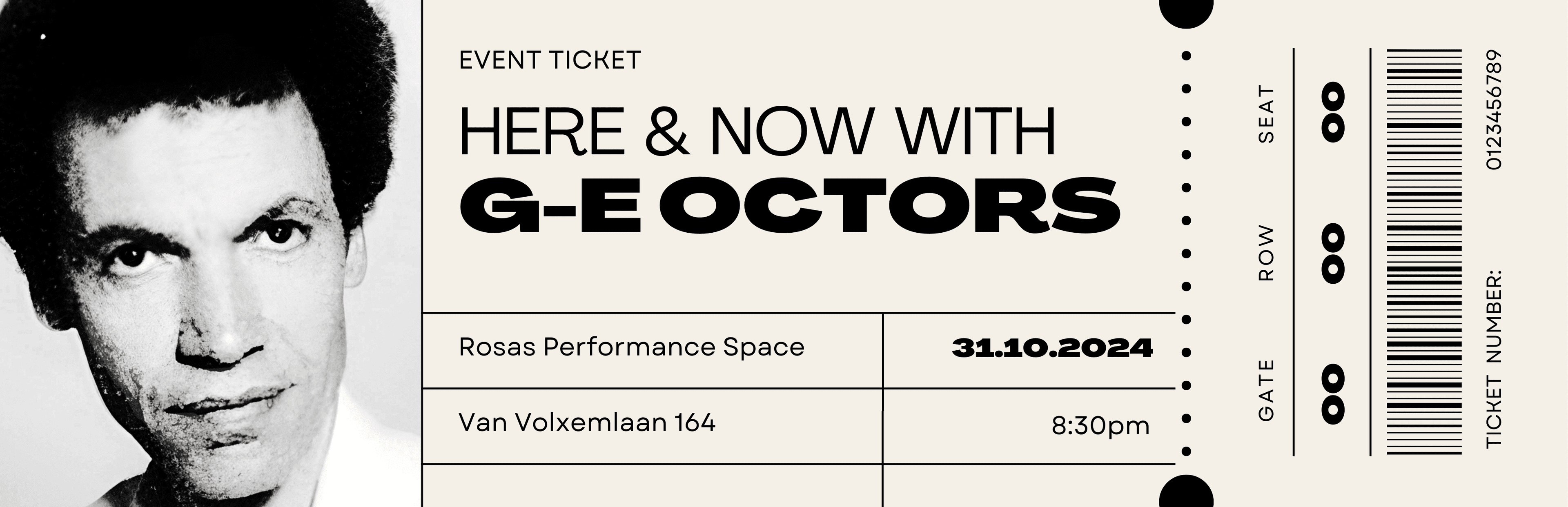
(Excerpt from the program notes for the “Here and Now With Georges-Elie Octors” concert, October 31st, 2024)
Georges-Elie Octors – known to all the musicians as Géo (pronounced Jay-Oh) – was the musical director of Ictus from 1994 to 2021. During this period, he conducted the vast majority of our concerts. We owe him an enormous debt of gratitude for crafting the ensemble’s unique sound from its first years – more than a sound, in fact, rather a method, a kind of friendship, a way of being together and playing together; a curious blend of obsessive meticulousness and laissez-faire.
To Georges-Elie, rhythm has always been the sole path into the sprawling forest that is music. All paths converge, of course, but for him, rhythm comes first. Don’t forget, after all, that he was also a percussion teacher until his retirement and a formidable virtuoso on the classical timpani. At rehearsals, before talking about anything else – harmony, timbre, phrasing – the ensemble first and foremost had to spend time playing together, really together, deeply immersed in the beat, identifying with and in tune with his gesture. We, the musicians, never tired of contemplating this gesture, the unparallelled elegance with which he would weave musical time. Georges-Elie didn’t make a big deal of it either. He’d developed a way of gesturing without emphasis but rather supple, dance-like, a world away from the ‘contemporary specialist’ conductors prevalent in the 90s, who look stiff as a board beside him.
Never did he say ‘ensemble, please, let’s see… second sixteenth note!’. To him, rhythm isn’t mathematical; it’s a vital leap forward. Whenever we weren’t playing in time, well, it was because his gesture wasn’t clear, or at least that’s what his modesty led him to say. He’d apologise and correct the gesture, repeating it with greater clarity and focus. Or he’d utter some enigmatic phrase that somehow clicked: ‘Just some points in space here!’ or his famous ‘whoever plays last wins!’ (to ensure successful syncopations).
Himself the son of a conductor, Georges-Elie can make a whole table erupt in laughter at dinner by channelling the great leaders of the post-romantic tradition. He knows it all by heart: the hilarious and outrageous stories about these legendary leaders, the machos, the tyrants, the bullies, the spoiled kids. He himself was never like that. For one, he was always simply incapable of getting angry. It may have bothered him a bit during his youth, but after realising how people loved him as he was, he learned to love himself, and everything just worked out.
“It’s good to cross the great water, for there are no obstacles.” So wrote the wise authors of the I Ching, telling us it’s time to grasp our chance. And that is precisely what being a conductor means to Georges-Elie, no more and no less – playing on chance, removing obstacles, smoothing out time, giving others an opportunity to cross the great waters. Because once the rhythm is found, when flowing gesture wins out over stiffness and awkwardness, everything else falls into place: the harmonic backbone falls into place, then the phrasing, then the form. There are no more obstacles, and all are free to contribute their own inventions, suggestions, even their own impertinence. And so the music goes on...