Maximalist! — Ictus plays De Mey & Vermeersch
✕Maximalist! — Ictus plays De Mey & Vermeersch
✕
164VANVOLXEM
OPENING FESTIVAL 30.1 > 22.2.2026
ROSAS + P.A.R.T.S. + ICTUS
Dancingkids / Platform K / workspacebrussels / Dancingkets
February 14 & 15 (doube bill part 1) | Tickets
at Rosas Performance Space, 164 Van Volxemlaan, 1190 Brussels
In 1983, Anne Teresa De Keersmaeker had her international breakthrough with Rosas danst Rosas, a performance that has since become a benchmark in the history of postmodern dance. Rosas danst Rosas builds on the minimalism initiated in Fase (1982): abstract movements constitute the basis of a layered choreographic structure in which repetition plays the lead role.
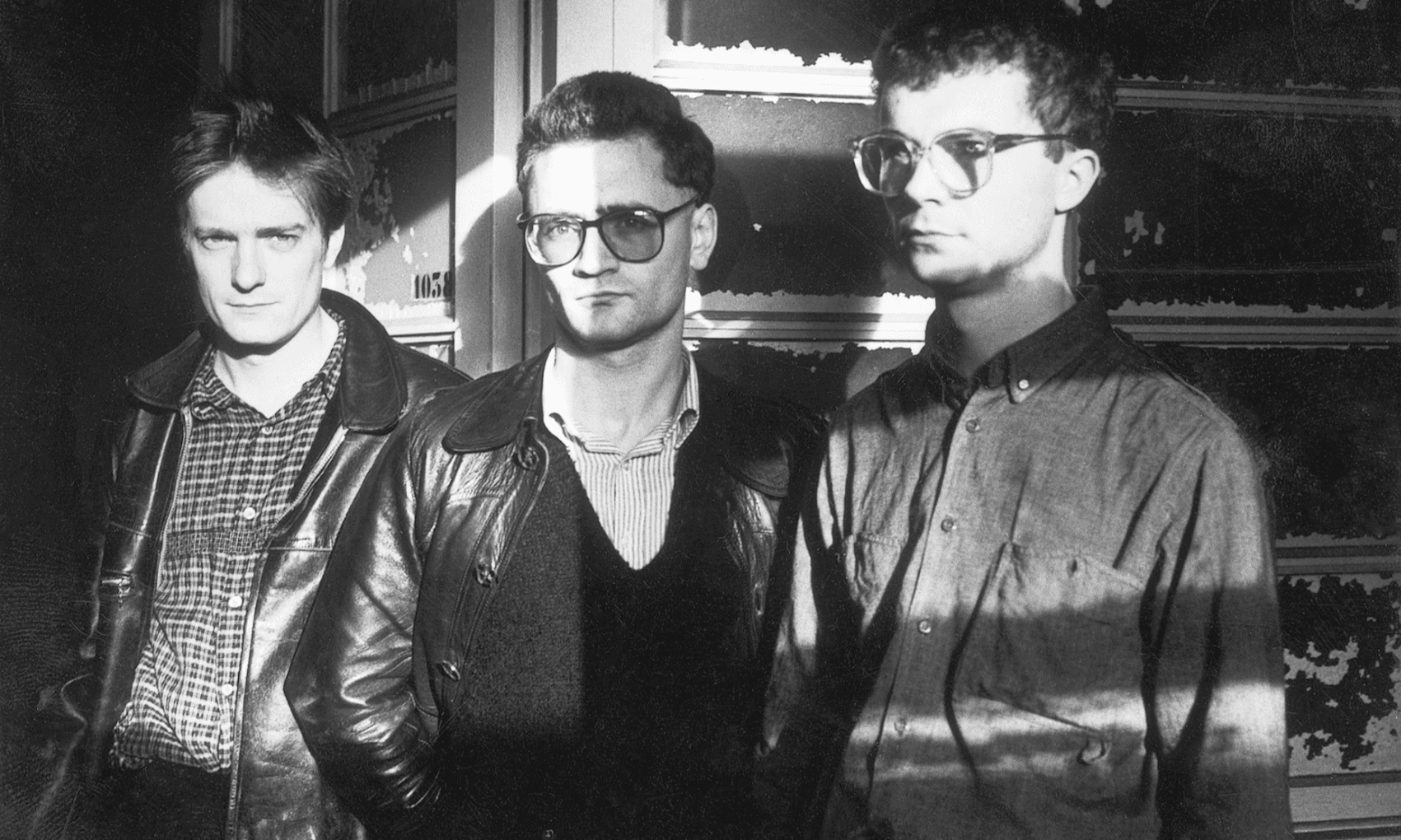
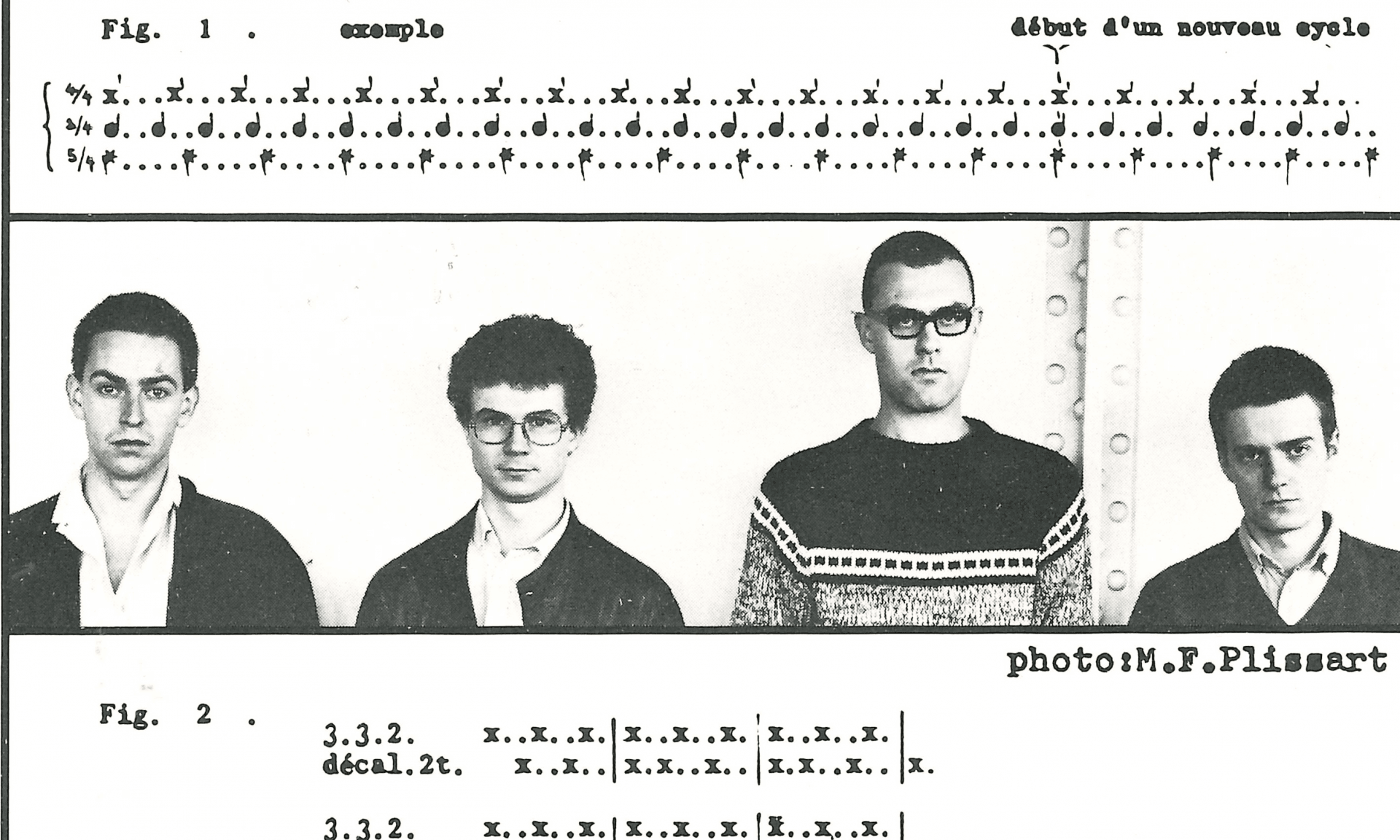
The music for Rosas danst Rosas was composed in 1983 by Thierry De Mey and Peter Vermeersch, who shortly afterwards founded the sextet 'Maximalist!'. The turbulent history of this sextet later gave rise to the Ictus ensemble in 1994. Maximalist! took on the torch created by the group ‘de Volharding’, founded in 1972 by Louis Andriessen and Willem Breuker: a European neo-minimalism, more aggressive and ‘hotter’ than American repetitive music. Thierry De Mey and Peter Vermeersch brought their own particular flavour to the group: the former with his taste for formalist procedures inspired by Ars Nova, the latter with his affinity for rock and surrealist jazz, from Carla Bley to Frank Zappa.
These two multifaceted talents, so different yet complementary, co-composed Rosas danst Rosas and Contre-Six ‘using four hands’, a very rare phenomenon in the history of written music. One cannot help but think of the famous preface to A Thousand Plateaus by Deleuze and Guattari: "Since each of us was several, there was already quite a crowd"! These are two masterpieces of energy, swing and melodic inventiveness, with a beauty of texture that rivals that of Steve Reich. These pieces have not aged a bit, as they bear witness to a particular moment in time, that of the collective and feverish invention of the ‘Flemish Wave’.
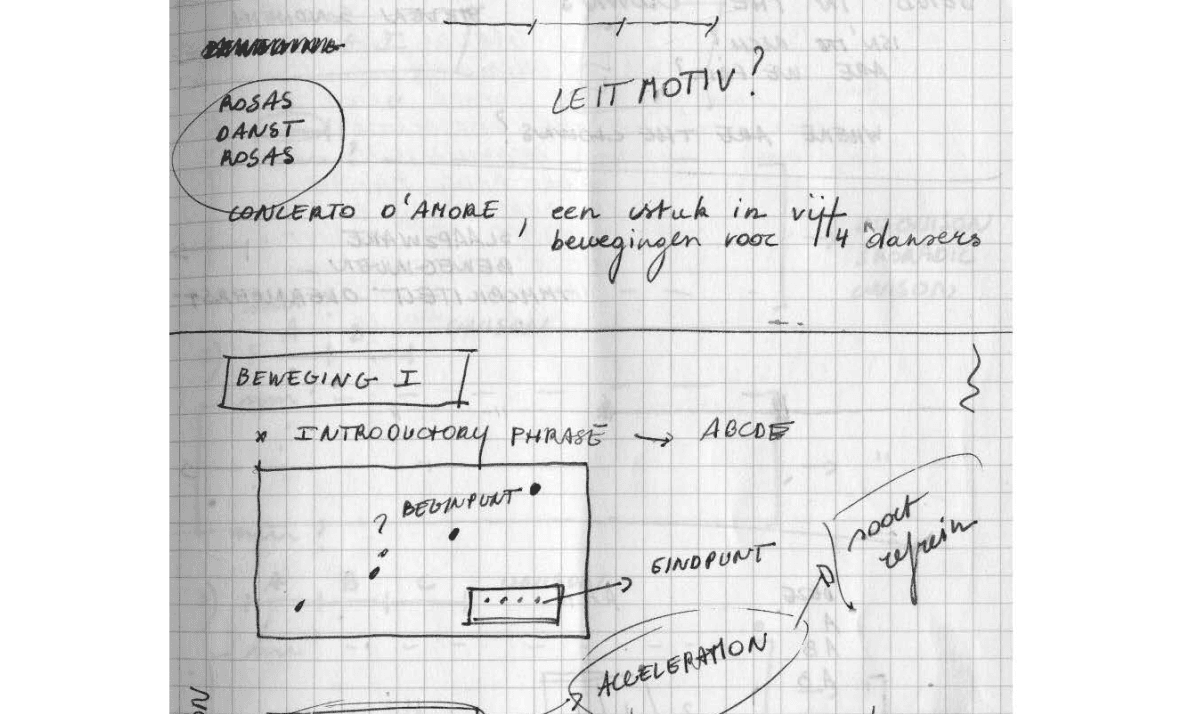
Carlos Sampaolesi leads a contemporary reinterpretation, inspired by Anne Teresa De Keersmaeker's working notes during the choreographic writing of Rosas in Rosas. It will be performed by an ensemble of musicians that also represents the current state of Ictus: three generations of musicians-researchers...
GALLERY