PREY [Kris Verdonck & Annelies Van Parys]
PREY [Kris Verdonck & Annelies Van Parys]
![PREY [Kris Verdonck & Annelies Van Parys]](/api/strapi/uploads/rey_2_71db2c6a80.jpg)
All pictures: Nika Prokopenka / Muziektheater Transparant
We are food
Val Plumwood
A new humility
PREY is a new music theater production by Kris Verdonck / A Two Dogs Company and Muziektheater Transparant, with original music by Annelies Van Parys, in co-production with Klara festival and in collaboration with Ictus ensemble.
How can we change the way we view humankind from a radical ecological perspective? What stories help us better understand the disruptions caused by the climate crisis? These are the questions that lie at the heart of PREY.
The starting point of this inquiry is the life and work of Australian ecofeminist Val Plumwood (1938-2008). After an attack by a crocodile, which she miraculously survived, she was one of the first to call for a new humility by placing humans back into the food chain of hunter and prey. Death occupies a central place in this idea. The texts she wrote about this are beautiful yet confronting and appeal to the imagination.
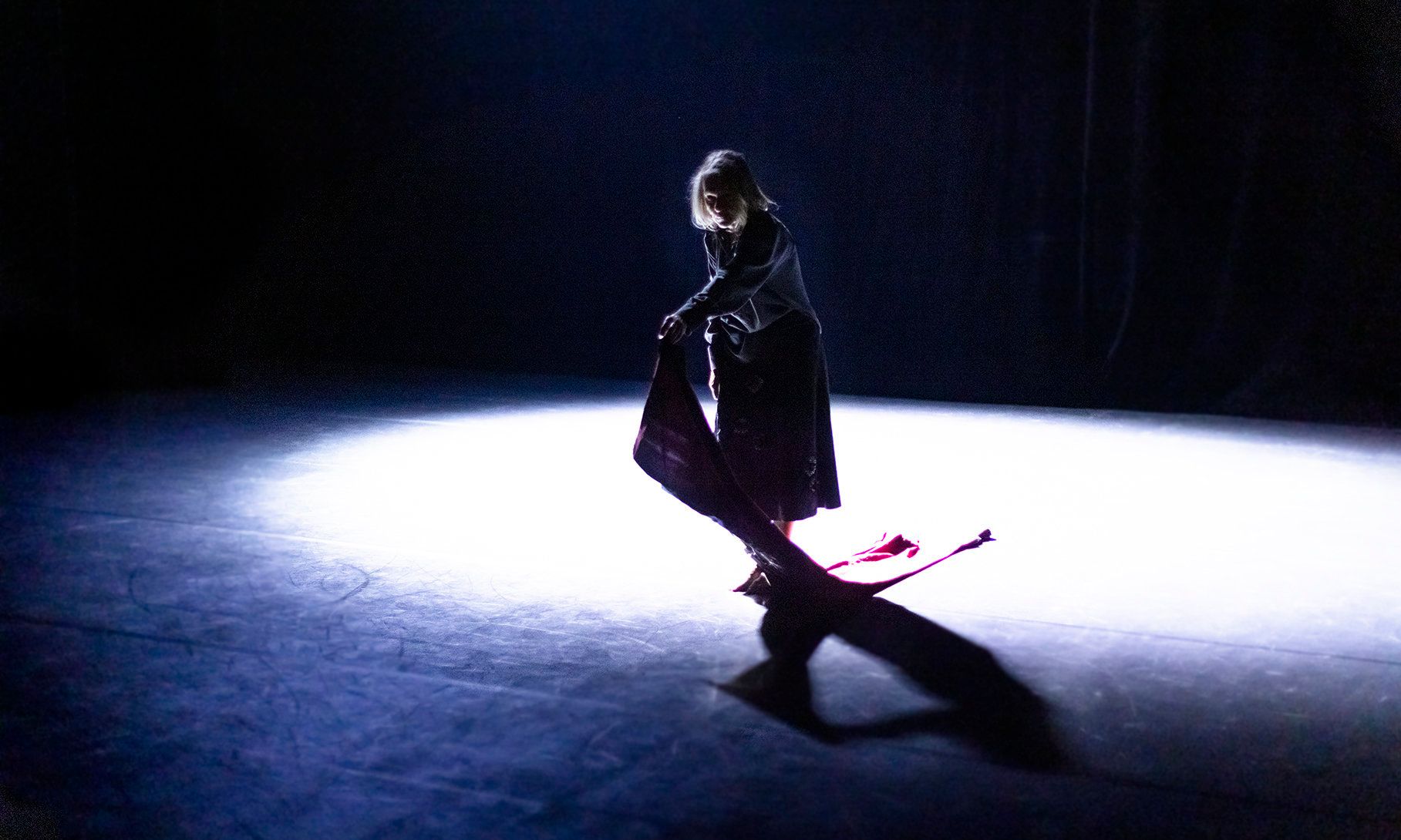
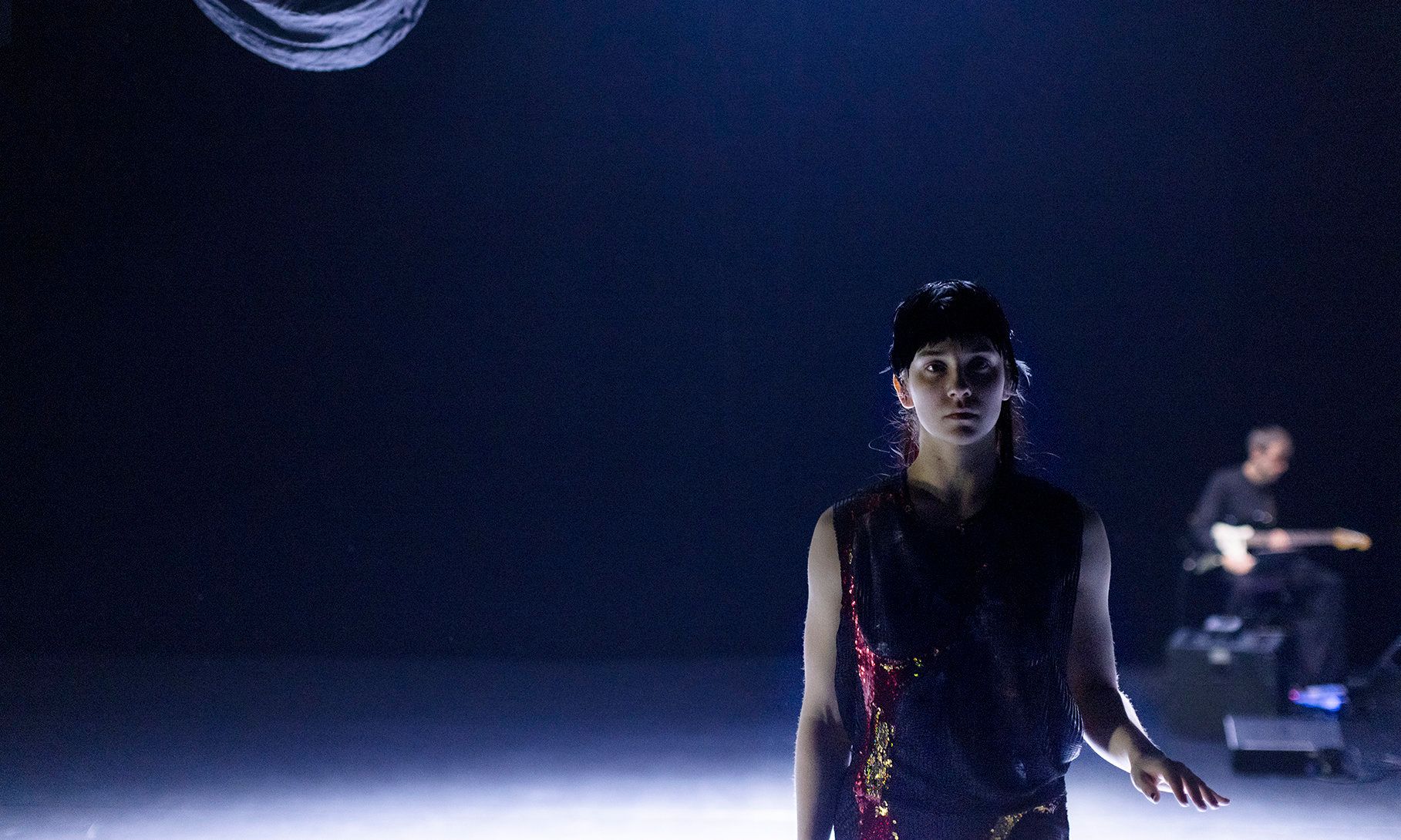
PREY will consist of three solos by three generations of women. Each has its own focus: text/language, song/music and dance/performance. With each solo, the tension between the human and the landscape, performer and scenography, becomes more intense and intimate. The essence of PREY is finding consolation in the frightening fact that we too are food, that we too belong to an ecological cycle of life and death.
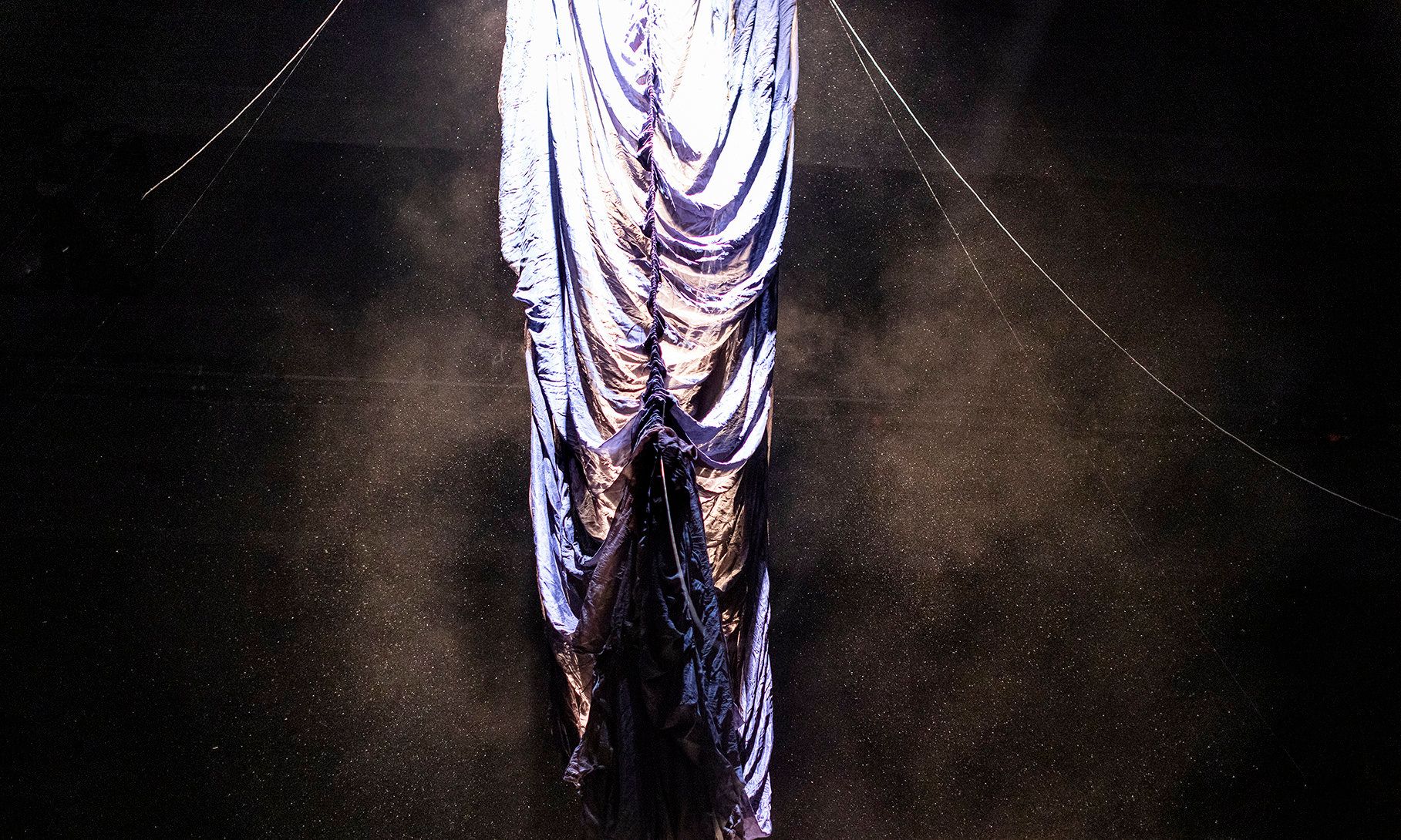
Kris Verdonck has gathered an extraordinary group of people around him for this performance: composer Annelies Van Parys, the ICTUS Ensemble, actress Katelijne Damen, singer Anna Clare Hauf and dancer Mooni Van Tichel. Verdonck is responsible for the scenography, a multimedia landscape in which the performers increasingly disappear and are swallowed up.
The premiere is scheduled for March 2023 at the Kaaitheater as part of the Klara Festival in Brussels.
Val Plumwood
In 1985, while on a canoe trip in Kakadu National Park, in northern Australia, Val Plumwood was attacked by a crocodile. It bit and dragged her underwater, up to three times. Plumwood survived this deadly attack, and the event would fundamentally change her view on life, death, and human beings. She had already been a key figure in the development of a radical eco-philosophy since the 1970s, and with the crocodile attack came a focus on the fragility of human beings and a desire for humility and connection. Plumwood was a pioneering eco-thinker, an important and yet often unheard reference for contemporary writers like Donna Haraway.
PREY starts from this unimaginable crocodile story and builds on two core ideas from Plumwood's oeuvre. First, there is the statement that “we are food”. Her encounter with the crocodile was a clear reminder that humans are a species that is also part of the food chain. Moreover, it is the dynamic of eating and being eaten that can reconnect us Westerners to our environment. As a result, death takes on a key function in the way living beings relate to each other and to the environment of which they are a part. Ecology, for her, is one big feast and being alive means being prey: a powerful antidote to fantasies of immortality and exclusivity.
For Plumwood, the idea of an immortal human being who is free to kill and exploit his environment was a consequence of a Western, rational, masculine worldview. This separated body and mind, nature and culture. Her feminism consisted mainly of a search for other narratives to connect people with their environment, and a plea for embodied experience. To be prey, after all, also means to be “body”, to be “flesh”. This is the second idea that PREY is inspired by: the bankruptcy of the classical Western narrative as a meaningful way to relate to the world. Plumwood found alternatives in the stories of Aboriginal people, but at the same time she did not deny that as a white intellectual she was always just a visitor in their world.
In PREY we see a friction between figures who cannot help but consider themselves to be at the center, and an environment that drives them away from that center. This is the paradox of the geological age of the Anthropocene, and perhaps this is where the performance finds its tragedy. The characters on stage have gone down the rabbit hole like some kind of 'Alice in wonderland', similar to Plumwood's life-and-death struggle with the crocodile, and there they have caught a glimpse of a different vision. Ever since, they keep looking for other ways to access that other universe, for ways to be prey and thus be connected to their environment. PREY is an attempt to give form to a traumatic event in which consolation and horror converge. Standing face to face with a crocodile must be a moment where your worldview is thoroughly shaken in a flash. It is also a moment that is difficult to repeat, which makes it necessary to look for other pathways. Or is such violence necessary?
Noh Theatre
Following Plumwood's plea for an alternative to the classical narrative, PREY draws on the Japanese traditional Noh theater. In Noh, the main character is usually the ghost of someone - or something - who died a traumatic death. These ghost stories are always intertwined with the landscapes in which they take place. It is as if the landscapes “contain” these stories, evoke them.
A Noh piece usually has three parts. The story does not proceed in a linear fashion but is repeated three times. First it is told with more distance, then it is retold from the perspective of a witness, and finally it is brought again, but as in a dream. Each repetition is more intimate, more intense and the structure leads to a surreal finale, as in a hallucination: a possible entrance into another reality.
Three solos – three generations
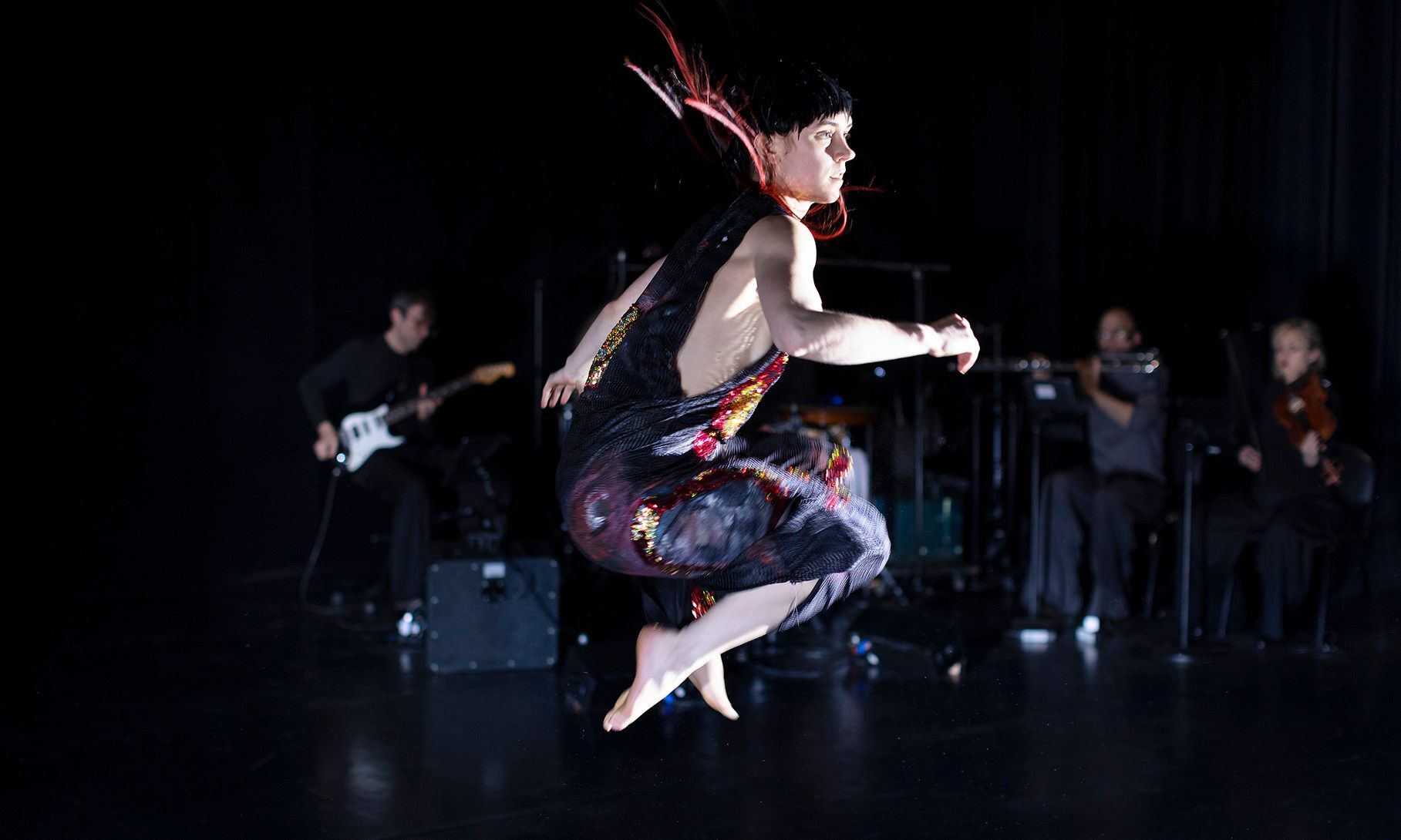
PREY, like a Noh piece, also consists of three movements. Each part is conceived as a solo for an actress, singer and dancer, respectively. Three generations of women take the stage, thus also telling something about how ecology is also about passing on from generation to generation. The first solo focuses on text and narrative and is played by Katelijne Damen, an actress with a long career in which she developed a precise and intriguing way of bringing a story. In the second solo, singer Anna Clare Hauf combines a low operatic voice with a rawer tone in a hard clash between harmony and more industrial vocals. Dancer and choreographer Mooni Van Tichel just graduated from P.A.R.T.S. and she will co-create and perform the third solo: a translation in dance of the fragility and violence in Plumwood's work.
Kris Verdonck will design the scenography for these solos. He will continue his trajectory of impressive stage settings with machines, projections and performative objects, as he also created for END, Conversations (at the end of the world) and Something (out of nothing). For PREY, Verdonck will be making a multimedia landscape of trees composed of drapes and projections. In this forest, the performers disappear into nothingness. Throughout the performance, this landscape transforms and zooms in on the enlarged base of a single tree. Gradually the performers are absorbed into their surroundings: a movement from a small person in a giant environment, to an interwovenness with a larger whole.
Annelies Van Parys will write a new composition for PREY for the renowned ICTUS Ensemble. Noh's three-part model, in which a different perspective is taken on the same theme three times, is gefundenes Fressen for her spectral music. The sound can be approached three times in completely different ways. The result will be a game of recognition and alienation in relation to the Eastern canon. Such a dialogue with a specific canon is characteristic of Van Parys' oeuvre, but for this project she really wants to immerse herself in the genre. She will compose for an unusual line-up: electric guitar (Tom Pauwels), flute (Michael Schmid), percussion (Gerrit Nulens) and viola (Aurélie Entringer).
Kris Verdonck and Kristof van Baarle will assemble the text, starting from Plumwood's oeuvre. It is not the intention to write a biography, but to find a theatrical form for her stories.
Consolation
With PREY, Kris Verdonck continues his body of work concerning a world in which humans are disappearing into the background. As the ecology debate these days demonstrates, this does not happen without a struggle. Denial or solutions that make use of even more technology - the same ones that got us into these problems in the first place - do not promise much good. But even for the growing group of people who do want to change something, the process of repositioning oneself is accompanied by existential questions, farewells and mourning. “Consolation might very well be what we need, for a world in which the end, for better or for worse, may become the new center. We will go onwards in a different mode of humanity, or not at all” (Val Plumwood - The Eye of the Crocodile).
GALLERY
CAST & CREDITS
WORKS
- Aurélie Entringer
- Gerrit Nulens
- Tom Pauwels
- Michael Schmid
- Katelijne Damen, Actress
- Anna Clare Hauf, Singer
- Mooni Van Tichel, Dancer
- Luc Schaltin, Lightdesign
- Kristof van Baarle, Dramaturgy
- Daniel Romero Calderon, Technics
- Vincent Malstaf, Technics
- Pim Mannaerts, Technics
- Britt Roger Sas, Coordination
Annelies Van Parys