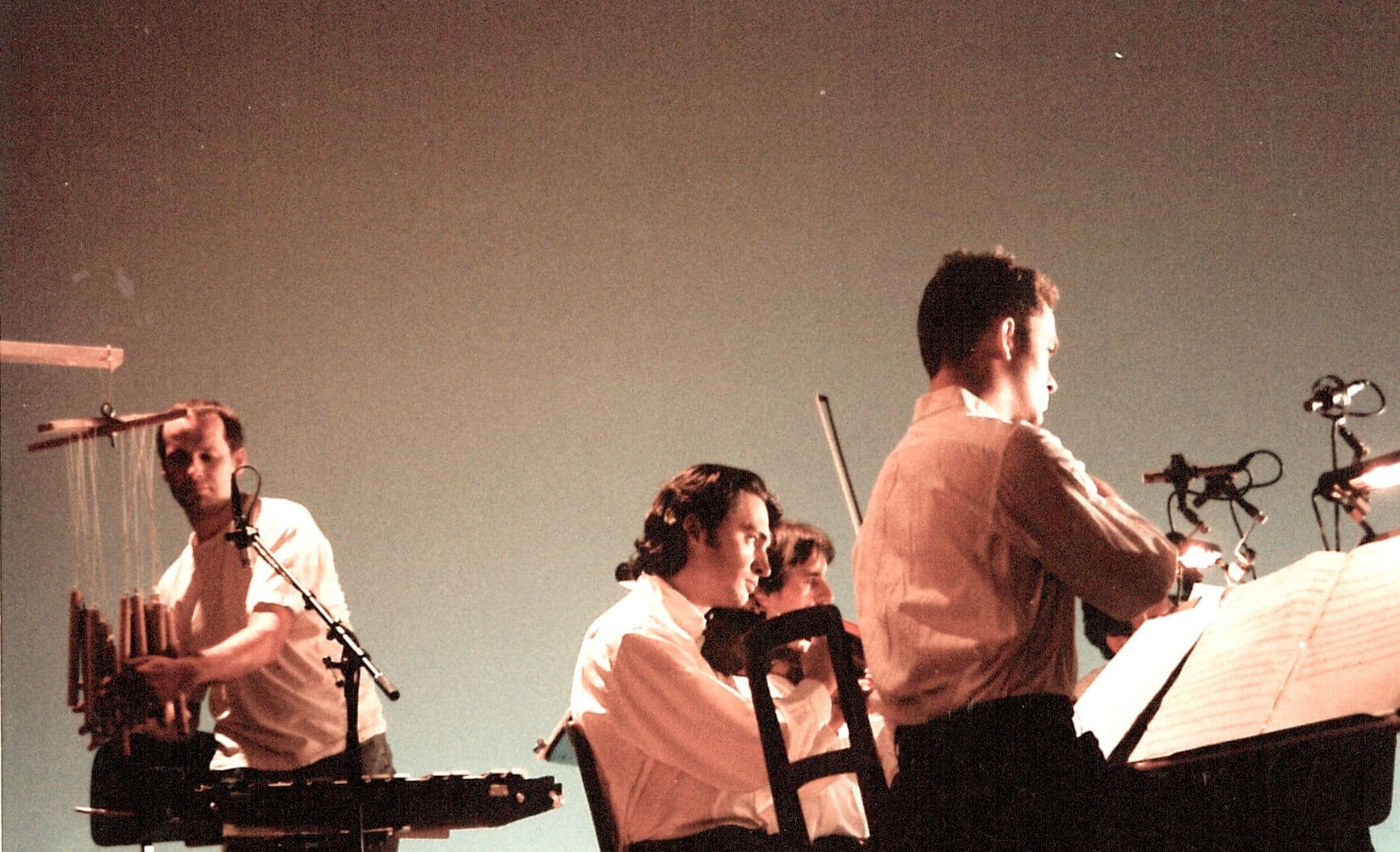
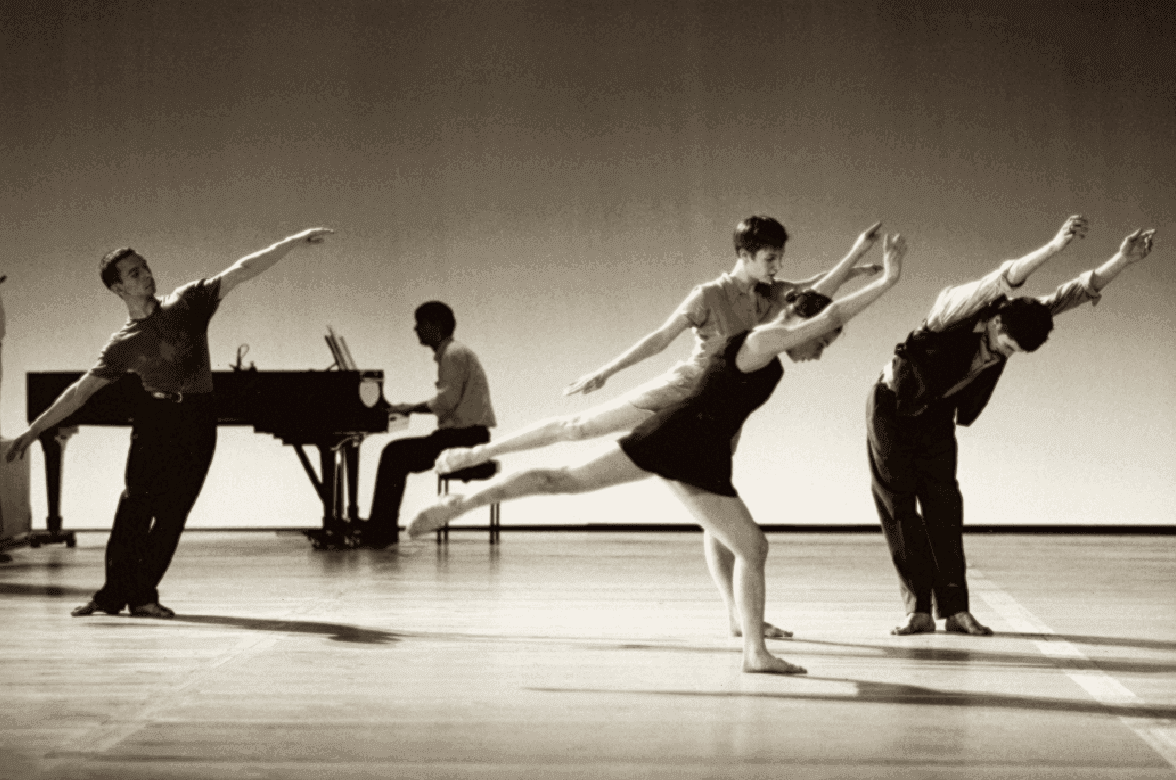
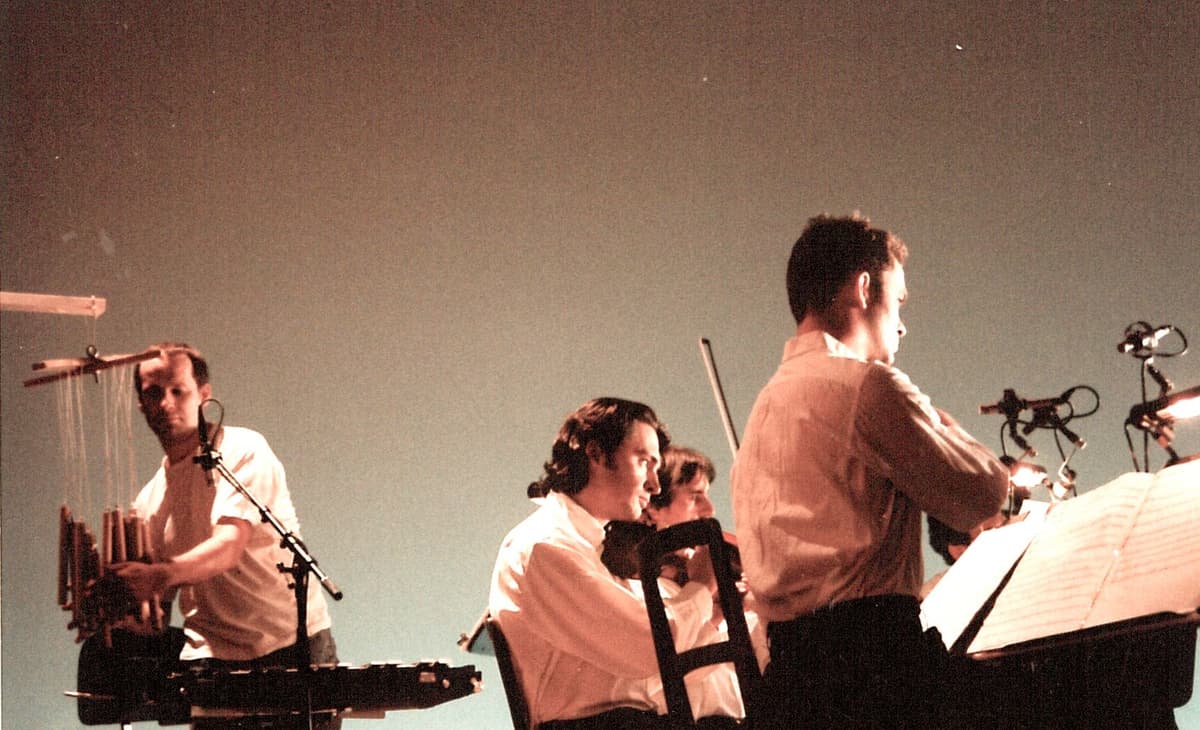
KINOK (with Rosas, 1994)
✕KINOK (with Rosas, 1994)
✕
Presentation by Marianne Van kerkhoven
Like Mikrokosmos, this piece, which opened in 1994, is also a three-part evening of dance: three choreographic episodes with separate histories are assembled in a single performance. However, compared to Mikrokosmos, or the later Woud, though ‘external’ elements like the set do give a certain unity to this evening of dance, it is to a considerably lesser degree. The whole is forged together by the dance language which, despite its apparent diversity, marks a new phase of the development in De Keersmaeker’s choreographic work: the cautious approach to the classic dance idiom.
The first part, Rosa, is a dance duet to Bela Bartók’s Violin Sonata. De Keersmaeker originally created this for Fumiyo Ikeda and Nordine Benchorf, and then with an eye to the short film entitled Rosa, which won several awards. Peter Greenaway filmed it in the refreshment room at the Opera in Ghent in 1992. So again we have Bartók, and again a duo between a man and a woman (see Mikrokosmos, the opening section of the production of the same name, from 1987). In the stage version, Rosa was performed by various casts in succession. After all, with the increase in funds already mentioned, the number of members of Rosas increased, particularly because of its new function as a repertory company. Over the last few years the Rosas company has been continually added to and its composition changed. There are however certain names that have for some time stood out as ‘permanent fixtures’: Cynthia Loemij, Samantha van Wissen, Marion Lévy, Anne Mousselet, and later Sarah Ludi and Marion Ballester.
The second part of Kinok is also called Kinok. It is a preliminary study for a new choreography, which was later to be incorporated into Amor Constante mas alla de la muerte, a production created at the end of 1994. The sequence of movement Marion Ballester set up in Kinok might be called the ‘primal’ or basic phrase used in Amor Constante: a slow sideways bend with arms stretched in the classical manner, executed to a theme played on the oboe. Each individual dancer in Kinok has their own movements, with separate musical stepping stones. There are barely any signs of dancing in unison to be found.
The third part of the Kinok performance is a reworking of the choreography set to Beethoven’s Grosse Füge, originally conceived for Erts. Nine dancers enter into varying relationships in duos and trios; the music is also given moments of complete freedom in this final part.
GALLERY