Robert Ashley and The Theatre Of Voices (concert)
Robert Ashley and The Theatre Of Voices (concert)
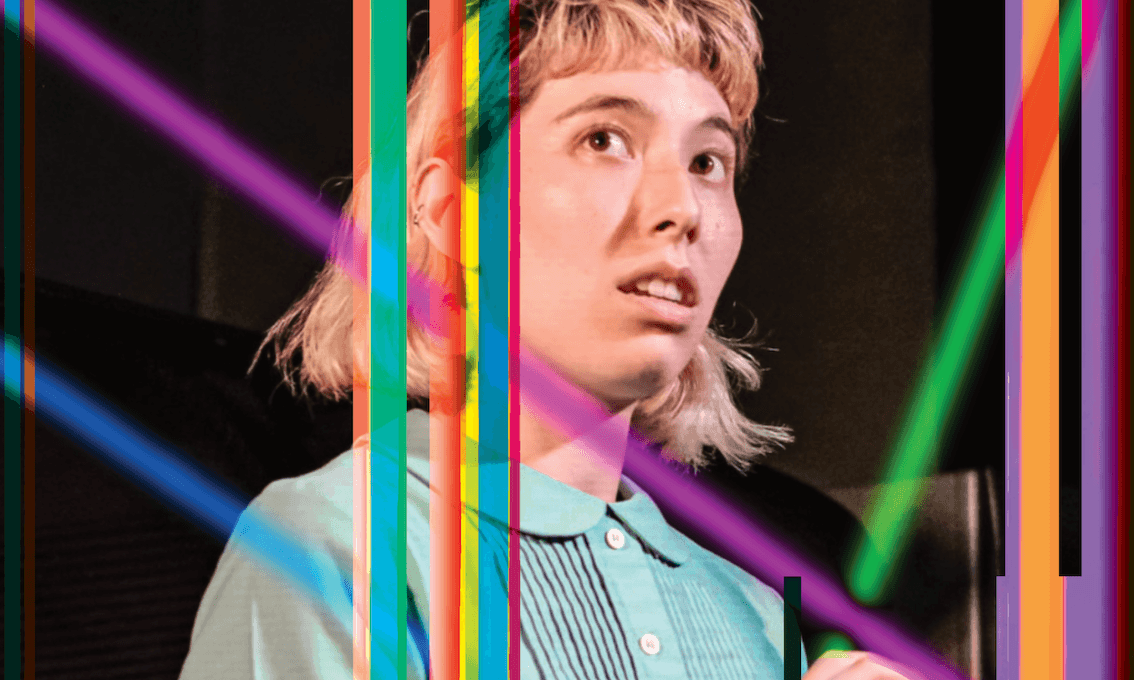
ROBERT ASHLEY
… is little-known yet renowned!
As you may recall, in 1983, Peter Greenaway made a prominent four-segment documentary called Four American Composers.
In addition to Philip Glass and John Cage, both eminent composers at the time, Greenaway’s subjective gaze also shed light on the importance of Meredith Monk and Robert Ashley in the development of American music. Today, we will particularly focus on Ashley’s oeuvre: elusive, and, in literary terms, undoubtedly the most ambitious of them all.
In the 1960s in Michigan, Ashley organized the acclaimed ONCE festival, a platform that presented and juxtaposed Fluxus style pieces with performances (Lucinda Childs, Steve Paxton), contemporary chamber music and punk (the festival saw the emergence of Iggy Pop and The Stooges). Ashley described his own style as ‘Music with Roots in the Aether’’, before it came to be known as ‘minimalist’ (1). Resulting from collective work, his oeuvre is a manifest of great creative freedom, and a far cry from the practices of classical-modernist opera.
__
(1) On the construction of this term, and the close semantic battle that accompanied it, see Christophe Levaux, We Have Always Been Minimalist
DAYDREAM
… or a ‘waking dream’: Ashley’s oeuvre in the 1980s is a prime stylistic example of what came to be known as the ‘postmodern’ moment.
“I don’t think there’s any heroism anymore”, said Ashley, resembling Andy Warhol in this respect. Case in point: Ashley’s paradoxical ‘operas’ did not have heroes but were instead based on individual narratives and populated by myriad characters from an archetypal Middle America.
Ashley suffered from a mild form of Tourette’s syndrome, which inspired him to produce an overabundance of involuntary sounds with varying degrees of significance. Based on this minor literature, he empirically established the three features of his inimitable style: the use of a microphone to capture highly subtle spoken intonations; a fascination with speed (“English doesn’t sound right when it’s slowed down”); and the aloofness of the perfect dandy.
The miracle was hence produced: the prose of non-heroic lives became Aethereal Music, altered states of consciousness. “I'm in a kind of daydream where I can hear words with music,” Robert Ashley declared.
A THEATRE OF VOICES
To leap into the heart of the matter, we have chosen to examine the most bountiful and enigmatic material Robert Ashley has ever produced: Perfect Lives, the 1983 seven-episode television opera directed by John Sanborn. Described as a journey through several quintessential places in the mental landscape of America — The Park, The Supermarket, The Church, The Bank — and the ordinary lives of those who inhabit them, the series, told in a distinctly American vernacular, puts great emphasis on video experimentation, and is generally considered a precursor of television productions ten years later.
Presented much in the same fashion as our novel version of Philip Glass’ opera Einstein on the beach — focused solely on the musicians at work — we will approach Ashley’s Perfect Lives from a strictly musical and performative angle. We direct our attention on the theatre of voices, creating thus new acoustic images of the body.
ABOUT JESSIE COX
Jessie Cox is a Black Swiss drummer, composer and researcher. He is currently completing a doctorate at Columbia University. He has worked with the Sun Ra Arkestra, Ensemble Modern and the JACK Quartet among others. His triptych that was specifically commissioned for this concert, is in its own way a part of our Theatre of Voices. It brings together two actors with paradoxical modes of existence: the songs of extinct species of birds and the so-called talking drum.
Jessie Cox:
“The Drum is a Tree and Re(mnants): of Woods and Skins are two pieces that engage the interrelated crises of the climate and of anti blackness through music as an opening for new possibilities towards unthought, and impossible, futures. The drum serves as a leading example and metaphor towards this possible refiguring of our futures. In its material constitution it is made of woods from trees and the skins of either cattle or wild animals. The devaluing and banning of drums, that accompanies forms of extinction such as colonialism, slavery, and capitalist exploitation, is reflected also in the destruction of the environments and lives – human and otherwise – that meet as/within/around the drums. The drum is also a sound, and like all those lives, life-forms, ways of living, ways of sounding, that get destroyed in these crises, its sound is in jeopardy. But, what might happen, when we music; when the sound of drums is valued again, and is changing how we come to value? Here, as those who are inheritors of survivors of multiple extinction events, we may rethink not only how we live in and with the world, but also what “we” may be.”
ABOUT LAURIE ANDERSON
O Superman is a part of the great multimedia cycle United States. This eight-hour show, composed and performed by Laurie Anderson, premiered in Brooklyn forty years ago, in 1983. It was a landmark of its time: at once monumental and ostensibly "bricolage", it is composed of video and still images, avant-garde and pop music, spoken text, gestural performance and playful electronics. The film of the show is now projected in a loop as part of the permanent collection at MoMA in New York.
O Superman is based on a subtle, poisonous poem that alternates between false leads and reversals. It opens with a delightful sense of humor: it seems that Superman's mother wants to check in and leave a message on her hero son's answering machine. Superman has to deal with a mother hen: what a romp! But "Mom's" voice soon changes its nature. It soon becomes The voice of all; The Voice – a disturbing figure of the Other, at once gentle, insinuating and anonymous: "Well, you don't know me, but I know you". On Superman's answering machine, The Voice then insists on leaving a very specific message: "So you better get ready,
ready to go | Here come the planes | They're American planes, made in America". The listener then understands that Mom's voice may be nothing more than the voice of America itself, the vague patriotism that remains "when justice is gone":
So hold me, Mom, in your long arms, in your automatic arms, your electronic arms, your petrochemical arms, your military arms.
GALLERY
CAST & CREDITS
WORKS
Robert Ashley
Perfect Lives, Act 3: The Bank (Victimless Crime), 1983
The Indifference Text (from The Improvement), 1984-1990
Jennifer Walshe
Trí Amhrán (Three Songs), 2019,
Songs 1 and 3
Jessie Cox
The Drum is a Tree I
Re(mnants): of Woods and Skins
The Drum is a Tree II
(commissioned by Contrechamps & Ictus, 2024)
Laurie Anderson
O Superman, 1981